Performance is an Outcome of Leadership Strategy. Fuel New Heights of Performance With an Inspiring Disruption.

Image source: Dreamstime

There’s untapped power and unrealized potential throughout most organizations today.

There are also dramatic differences in what people want in their work. The way leaders respond to these two seemingly unrelated developments can make all the difference. As with other significant transformational change, there is a window of opportunity for leaders to adopt new strategies.

The moment we have now is the most optimum and critical time for Leaders to act.   

As you can see, we have videos from YouTube for you. They are quick and enjoyable to see. Sometimes videos are best to help drive home valuable points.  Read on. We’ll cue you at the best times to view them.

Teamwork is Not Enough

Building teamwork has long been a focus in most organizations. As a result, many groups have made inroads in establishing teams to focus on specific projects, new technology implementations, and quality improvement initiatives and using committees for various company events.

Still, teamwork across functions in performing the work of organizations often falls short of expectations.

This is often due to conflicting goals and priorities that cause a divisive rift between internal groups.

One enduring example you may have experienced is the oft-painful tension between Sales vs. Production.

Sales has functional goals requiring pushing for faster delivery and scheduling exceptions to win new business or increase customer satisfaction.

Production has productivity, efficiency, and quality objectives that depend on maintaining a well-ordered system for scheduling and delivery commitments to customers. 

I often hear people accepting this as a norm. But, unresolved conflict brings unintended consequences for both workplace relationships and business performance.

This cross-functional break in Teamwork can prevent or damage communication and erode joint problem-solving. But, this can usually be resolved when leaders take two strategic actions:

  1. Shifting departments’ attention to the higher goal: the organization’s purpose, its differentiation. This requires leading people in re-framing to foster a shared, higher-impact perspective.
  2. Building collaboration skills and enabling creation of win-win outcomes.

The Difference Between Teamwork & Collaboration

“Teamwork” and “Collaboration” are standard terms in many organizations. In fact, we often see these two terms used interchangeably, although there is a clear, distinguishable difference between them. Not only is each a different work process, but the knowledge and skills that drive success in each can be quite different.

This article aims to compare Collaboration with Teamwork and offer insights that can help you and your organization leverage each for the most significant results and benefits.

What is the difference between Teamwork and Collaboration?

I found excellent definitions at team-building-bonanza.com, where they wrote:

Teamwork is a group of people working together to make one goal or one project happen, but each individual within the team may be doing a different type of work to help the group as a whole.”  — source: LINK: https://team-building-bonanza.com/

A Quick Demonstration

Here’s where the 2 videos above come in.  Please watch the video (top left) now.

On the left is Ohio State University’s Marching Band performing their amazing 2012 half-time show with its video game theme. This is truly an exciting performance, isn’t it? It’s a compelling example of excellent teamwork.

Collaboration is also a group of people working to make one goal or one project happen, but they are working together and feeding off one another. They are making decisions together and working jointly rather than separately completing their own tasks.” — Source – LINK: https://team-building-bonanza.com/

Now, watch Collaboration in action in the video above on the right, a Ted Talk on The Marshmallow Challenge.

In this 7-minute Ted Talk, we found several key points:

  • Conducting a workshop using The Marshmallow Challenge helps create an actual experience that quickly gets adults collaborating effectively.
  • Collaboration is the very essence of applying an iterative process.
  • Facilitation skills and specialized skills relative to the work are critical to successful Collaboration.
  • Reward/incentives are actually counter-productive to generating success in Collaboration.

Collaboration isn’t limited to face-to-face gatherings. Alternatively, it can occur when people come together using group-work technology such as Zoom. 

The Collective Impact of Teamwork and Collaboration

One less known fact about Ohio State U’s 2012 half-time show is that, before it became a teamwork event on the football field, the show’s design was the product of Collaboration between students, Interim Band Director Jonathan Waters, and his staff.

What are the implications? Imagine the outcomes of designing work in an organization such that people collaborate upfront and execute as a team. Couldn’t this be powerful? Might it be game-changing for the organization?

Then, too, envision the effect on the people doing it. How would this approach to work impact the culture and experience of work for your people?

By building, strengthening, and spreading Teamwork and Collaboration throughout the organization, we can envision gains to be made in performance as well as in talent acquisition and retention. The question that comes to my mind is this: Are the potential results worth the investment that may be required?

Guess Who’s Learning Collaboration in School

The good news is that today, children are developing collaboration skills in some daycare and educational environments under the guidance of skilled leaders. This type of early experience will ensure our children will likely have strong skills in both Teamwork and Collaboration by the time they enter the workforce in the years ahead.

An excellent example of what schools can do to reinforce an attitude of Collaboration among children is provided in the video below, in which young students participate in an iterative process and practice constructive, caring interpersonal skills: Austin’s Butterfly https://youtu.be/hqh1MRWZjms

The Bottom Line

In the new working environment, leaders have to do more than set direction and drive execution, they have to take on this third role of building and enabling employee networks.” — Lisa Renner

In today’s socially connected environment, more and more companies leverage internal blogs, conference calls, and video conferencing to enable Collaboration. Many are now enabling employees to build connections and relationships from the time they are hired through enriched onboarding processes. Lisa Renner recommends leaders do three things to build Collaboration:

1. “Focus on being an active model for network building and spend time on connecting individuals

2. Align and direct their network through communication

3. Enable autonomy throughout the network.”

These actions require leadership to model and prioritize relationship-building and interpersonal skills development essential for people to engage and work together in collaborative efforts. As leaders, we can do this by ensuring collaboration skills are among the critical competencies established for the organization and by providing training and development initiatives, including those skills and other knowledge and capabilities required to achieve the business strategy.

Of course, the human networks that leaders create need to have high confidence in their understanding of the company’s purpose and differentiation strategy, including strategic goals. To innovate and execute value for the organization with autonomy, the people need to know that their innovations, changes, zigs and zags tie directly to these strategic cornerstones.

With our world moving more and more deeply into social connections and business networking, it’s clear that organizations will need to establish their own networks to thrive now and in the future. This means Collaboration capability is becoming increasingly essential to achieving new heights of performance. And, new heights of performance can take us into the future.

Next Steps

Performance is an outcome of an organization’s design. The greatest need in 2022 is for Leaders to instill a transformative level of teamwork and collaboration. An organization’s culture and employee development strategies come together to form a workplace identity and its reality.

Blending teamwork and collaboration throughout an organization can fuel heightened performance outcomes. This blend can re-shape the employee experience in ways that help attract, develop and retain talent.

Safely bringing people together in the workplace after the drought of isolation we’ve endured through COVID, provides leaders with a fresh start.

We can leverage this opportunity. Let’s build a workplace that enriches the experience of work through greater togetherness rooted in a powerful, new version of teamwork and collaboration. I’m convinced that doing this will bring about exciting business outcomes.

What is your organization doing to maximize Teamwork and Collaboration?

  • Are leaders taking these work approaches to a high enough level, integrating them organization-wide? 
  • What tools are being implemented to enable participation across your organization functionally and geographically? 
  • What could be done that hasn’t already been put in place? 

Please share your opinions, experience, and ideas.

Recommended Reading

“1+1=3 The New Math of Business Strategy: How to Unlock Exponential Growth through Competitive Collaboration,” book by Lisa Renner

Website – LINK: https://team-building-bonanza.com/

Photo by Pixabay on Pexels.com

Are You Interested in Finding Out About Our Coaching Services?

Contact Us:

Email: NadeauCoaching@outlook.com

Telephone: 603-801-2416

Message on Facebook LINK: http://Facebook.com/nadeaucoaching

Join our new Facebook Group, Friends of Nadeau Coaching – LINK: https://www.facebook.com/groups/405884627320359/

What 3 Actions Can Drive Success For a New CEO?

Image source: Pinterest

“New CEOs face a critical strategic choice. Should they settle into the job, spend a year or more getting to know their businesses, and then start shifting the portfolio? Or is it better to act quickly and boldly early on to divert resources from mature activities to a new generation of corporate opportunities?” This key question probably highlights the first decision a new CEO must make, and was the subject of a survey by McKinsey, that will be of interest to CEOs everywhere.

McKinsey found that moving quickly to take effective action is more likely to improve organization performance and market position. We believe it’s also more likely to build employee engagement, which is a critical factor driving performance as well as building customer interest and anticipation of change beneficial for them and their future.

When a new leader is brought on board, the entire organization is poised for change. Waiting too long often creates a wide-spread impression that nothing is going to change. But, moving too quickly, without having taken action first to obtain both internal and external information and data that provides a clear context for change, often creates the impression that the new leader is making snap judgments and doesn’t care to find out what others know and recommend.

How can a new leader determine the right time, early, to begin driving a shift in resources, changes in staff, and set direction for the business? We recommend the following 3 steps for a new CEO to drive success:

1. Obtain data using outside sources to assess effectiveness of the company’s value proposition its competitive advantage. What is the unique difference that drives customers to buy from this company? How long will that unique difference be effective in our fast-changing business environment? Who are the key competitors and what are their strategies? How might technology, customer needs, and the industry evolve and what are the implications for the future? Obtaining this data for review and discussion with the executive team is essential.

2. Meet with the executive team, their teams, and the workforce to introduce yourself. Let them know what they can expect from you as their new leader, and that you’ll be obtaining their input to help inform you in planning the pathway for an exciting future. Meet with individuals and with small groups in carefully prepared, facilitated discussion sessions.

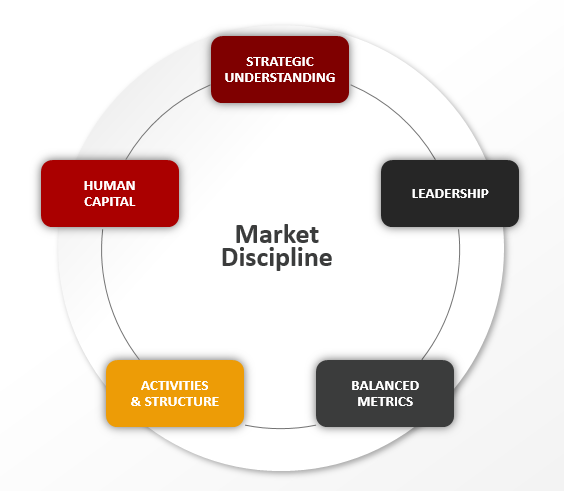
3. Complete an organization assessment to determine where the company is now in terms of its readiness and capability to execute its current strategy.  Use a professionally crafted, simple, quick, non-intrusive questionnaire that can you with your executive team and then cascade across the entire enterprise. If you use multiple choice questions with a space for comments you could quickly assess your organization in the 6 key aspects of strategic performance (see our article using the second link below for more information on these components):

a. Strategic Understanding
b. Leadership
c. Balanced Metrics
d. Activities and Structure
e. Human Capital
f. Market Discipline

Report back to the organization to share the results of your information gathering and the next steps.

By taking these 3 actions, a CEO can, within a few months, equip him/herself and the organization with the knowledge, information and insights that are critical to driving the right changes at the right time.

Following these 3 steps will provide essential data and information from expert and stakeholder perspectives and catalyze insights as well as engaging both your executives and your workforce in the gathering of information that, combined, sets the context for effective change.  And, once engaged and certain of their direction, your workforce will follow you, energized with commitment.

What are your related thoughts and experiences? Please share them with us below.

Sources/Recommended Reading:

Updated, copyrighted 6/9/2021 by Rosanna M. Nadeau; Copyrighted 10/19/2013 by Rosanna Nadeau, Prism Perspectives Group LLC

Image source: Pinterest

Are you interested in finding out about our Coaching Services?

Email: NadeauCoaching@outlook.com

Telephone: 603-801-2416

Message on Facebook LINK: http://Facebook.com/nadeaucoaching

The “WOW!” Is In The Details

Image source: Pinterest

It’s surprising how easy it can be to WOW people. 

Yet, in the crush of our busy days we are focused on getting things done and checking off our to-do lists.  As the day heats up we fire-fight, multi-task, prioritize, work through lunch, come in early, and stay late.  And, in the process we usually do a good job on accuracy and product quality — and we can sometimes become blind to doing the little extras that could make the difference between satisfying and or wowing employees and/or customers.

Let’s take a moment to reflect on the Wow experience.  Consider:

  • What have people done that has Wowed you? 
  • Have Wow experiences ever changed your attitude and behavior?
  • How can you tell when you’ve Wowed someone else? 
  • What’s the impact of “Wow!” and is it worth taking time to create it?

About 20 years ago, I was engaged as a consultant with a new leadership team responsible for a new company made up of several recently merged manufacturing companies.  The V.P. of H.R. was my principal client and I often received support from his assistant, a woman named Gail, a special woman who knew about the power of Wow.  Gail showed us how investment in details can transform an effort from good to Wow.  To this woman, it was simple:  “Let’s make it nice.”  This was Gail’s approach with people in general, in both her work and personal life.  And, what a difference she made for people and for the organization.  The thing is, we can all make this difference – it’s all about creating the “Wow!” and it takes remarkably little time and effort.

Following are two typical situations where the “Wow!” is available to us, in the details.

Reward:  Team Lunch

Option A:  Getting it DoneOption B:  “Making it Nice”Results
Order plenty of pizza with different toppings Table cloths Option A:  Creates satisfactionOption B:  Creates the “Wow!” 
Place the pizza boxes on a table with paper towels Plastic  forks, knives; straws, napkins, paper plates 
Include salad as part of your buffet, for people who are trying to eat more healthfully OR provide menus for people to choose their own food 
Sodas, water 
Paper place mats that say Thank You! with each employee’s name 

Set Up Summer Safety Hydrating Program For Plant Employees

Option A:  Getting it DoneOption B:  “Making it Nice”Results
On the first hot day, find spots to put out water and gatorade In advance, purchase travel cups with the company logo and each employee’s name for them to use in and outside work Option A:  Creates satisfactionOption B:  Creates the “Wow!” 
Communicate in team meetings about  the safety issues of working indoors in the heat  Plan the locations of hydrating stations so that they are quickly accessible to all work station and share it as a graphic with your team for their input prior to set-up
Review the rules  Print a one page flyer of summer hydration information (from the OSHA.gov web-site) and hand them out in the travel cups during your team meeting 
Invite your Safety representative to the meeting to talk about the symptoms and signs of dehydration and heat exhaustion and how to deal with them 

Set Up A Company Cook-out For All Employees

Option A:  Getting it DoneOption B:  “Making it Nice”Results
Provide a grill, picnic tables and benches, hamburgers, hotdogs, condiments, napkins and plastic forks, spoons, knives; employees prepare the foodAdd salads, beverages, cookies and table-cloths on the tables and designate managers to prepare the food for employees with choices of rare, medium rare and well doneOption A:  Creates satisfactionOption B:  Creates the “Wow!” 
Schedule it for non-work hours, in advanceSchedule it during employee paid work hours, in advance
Have a member of management give a talk before the meal on a business subject  Have a member of management give a talk to thank employees and share good news before the the meal

Provide an Ice Cream Social for All Employees

Option A:  Getting it DoneOption B:  “Making it Nice”Results
Schedule an Ice Cream Truck to come during paid time and communicate it in advancePurchase tubs of several flavors of ice cream with a selection of toppings as well as boxes of various ice cream bar treatsOption A:  Creates satisfactionOption B:  Creates the “Wow!” 
Schedule it during employee paid hours, including either indoor or outdoor seating
Set up serving stations where employees line up in short lines and managers make sundaes to order, employees choose treats

The value of wowing people is in how it makes them feel:  important, cared about, and appreciated.  It builds feelings of mutual good will.  By making extra effort you’re leading by example.  And, you’re building a Wow culture. Is it worth it? You decide.

Please share your thoughts, opinions and experiences with “Wow”.  What difference could you make as a leader at work with a little more focus on details, on ‘making it nice’, on creating the “Wow!”?

Revised, Copyright 6/8/2021 by Rosanna M. Nadeau; Copyright 4/28/2014 by Rosanna Nadeau, Prism Perspectives Group, LLC.

Image source: Pinterest

Are you interested in finding out about our Coaching Services?

Email: NadeauCoaching@outlook.com

Telephone: 603-801-2416

Message on Facebook LINK: http://Facebook.com/nadeaucoaching

Has Your Employee Suggestion Program Run Out of Gas?

Image source: Dreamstime

Has your suggestion program run out of gas and died?  Don’t worry, you can reincarnate it quickly with these tips!

Image source: Shipping Times via Vetter.com

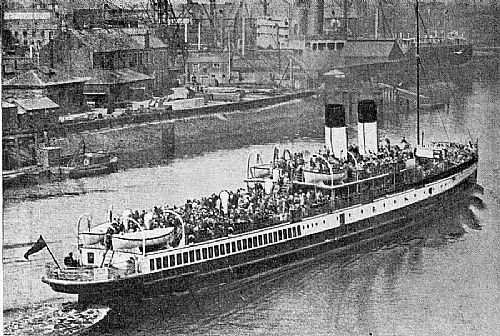
History:  The first company to introduce an employee suggestion program is believed to have been William Denny and Brothers, a shipbuilding company in Scotland, in 1881. The purpose of the program was to  leverage employee knowledge and ideas to drive improvement.  Initially, the shipbuilder’s employees were eager to contribute suggestions simply because they were asked.  Later, rewards were offered. By 1888, of the 600+ ideas submitted, 196 were implemented.  A low success rate by today’s standards, this was a significantly strong result back in those days when command-and-control was the way of life for people at work. At that time in our history, employees were not often asked for opinions or ideas.

Today’s workforce expects a simple suggestion process that moves quickly with timely decision-making by management.  Evaluation of suggestions needs to be done promptly by a qualified and objective group of people who have a track record of embracing effective change.  In addition, suggestion programs need to be tweaked periodically i.e. quarterly, to hold employee interest.

dreamstime_m_6568555 smiling steelworkers

Following are 10 tips that can be tailored for your organization:

1.  Launch the program with enthusiasm, in group meetings. Use visuals and provide handouts and postings explaining the few, concise and easily understood rules. Explain the program’s purpose, i.e. to improve the organization’s competitiveness by continuously improving what we do and how we do it. Infuse the launch with high energy and show how the process is streamlined to ensure momentum is high and sustained, with a consistent, timely management response.

2. Be clear about the areas of focus.   When you start up the program you may want to capture low hanging fruit, ideas people have had for a long time, as well as new ideas.  In this case, you may request a wide range of suggestions.   Explain what constitutes a suggestion as part of this program.  For example, to be eligible for this program, suggestions need to pertain to improving operating processes, procedures, efficiency, effectiveness, on-time shipment, floor layout, and safety in the workplace.  Examples may include ideas to simplify work, to make work faster, to improve quality, to reduce scrap, and to reduce time spent waiting, doing paperwork, entering data, and moving material.  In 3-6 months a change of focus re-spark interest and creativity.  You may decide on 1-3 specific targets for suggestions to address, but keep a “parking lot” for other ideas that are eligible but outside the current focus areas, for review as time permits.  That way ideas won’t be forgotten in the meantime.

3. Hold a contest for employees to name the suggestion program, and provide the winner with a prize.  Purchase program T-shirts imprinted with the name of the suggestion program.

4. Establish a Suggestion Program Review Committee.  In Manufacturing, for example, this might include a Production Manager, Cost Accountant, Manufacturing Engineer, Human Resources Business Partner, and 1-2 production employees.  You’ll want a committee of people who have expertise in specialties needed for a quick but thorough evaluation of a suggestion and it’s impact, in terms of dollars, work process effectiveness, efficiency, and simplicity, and on interdependent work activities.  It’s a good idea for the committee to agree on qualified back-up members to substitute in the event that a committee member cannot attend.

5. Schedule regular meetings of The Suggestion Program Review Committee, in advance, throughout the year.  It’s important that the committee meet often enough to develop and maintain momentum to ensure a quick, timely response to employees.  We recommend meeting often enough so that the committee can discuss the suggestion, complete their analyses, and communicate a decision within a two-four 2-4 week time period, maximum.

6. Ensure employees who make suggestions meet individually with the committee (during its regular meetings) to share all of the pertinent information and details the employee has in mind.  The committee should ask clarifying questions and tell the employee the next steps and the timeframe.  Each employee needs to be informed, in person, by the committee or a committee member of his suggestion’s status, decisions made (and reasons), respectfully and with sincere appreciation for the effort, including answering related questions the employee has.  Someone from the committee should also inform the employee’s supervisor of the suggestion and of the decision.  The work of the committee members includes fully understanding the suggestion and completing analyses such as assessing the impact of the suggestion on work processes, people, and customers, projecting the cost of  piloting the idea and of full implementation, and estimating ROI.  If the suggestion looks promising based on the review, a pilot should be approved.  Success in a pilot would typically be a prerequisite for full implementation.

7.  Maintain a suggestion log to document each suggestion, who made it, the analyses, decision, pilot, implementation and the suggestion’s impact.

8.  Be clear about rewards.  For instance, you may award a program T-shirt to each employee for his/her initial suggestion, a $25 gift card for each idea approved for pilot implementation, and another $25 for an idea approved for full implementation.  We also recommend providing certificates to employees whose ideas are piloted and/or fully implemented, as well as posting them visibly.

9.  Keep everyone informed by holding brief monthly meetings to provide program updates including information such as the number of suggestions received, who submitted them, details on suggestions approved for pilot, suggestions approved for full implementation, results of pilots, results of full implementations.   Give out applicable rewards and certificates publicly in each meeting.  Post these results as well.

10.  Integrate the Suggestion Program with other improvement idea generation activities such as those that are part of Lean.

Whether you’re developing a first-ever suggestion program for your organization or reincarnating one, you may want to consider these questions, as well:  

  • Have you obtained full support from your management team? 
  • Have they bought into your program design? 
  • Do you have a budget? 
  • How will changes and rewards be funded? 

Please share your ideas, suggestions and opinions!

Copyright 6/7/2021 by Rosanna M. Nadeau

Image source: Pinterest

Are you interested in finding out about our Coaching Services?

Email: NadeauCoaching@outlook.com

Telephone: 603-801-2416

Message on Facebook LINK: http://Facebook.com/nadeaucoaching

Is Competitive Advantage at Risk of Being Lost in the Execution of your Strategy?

Image source: Prana Business

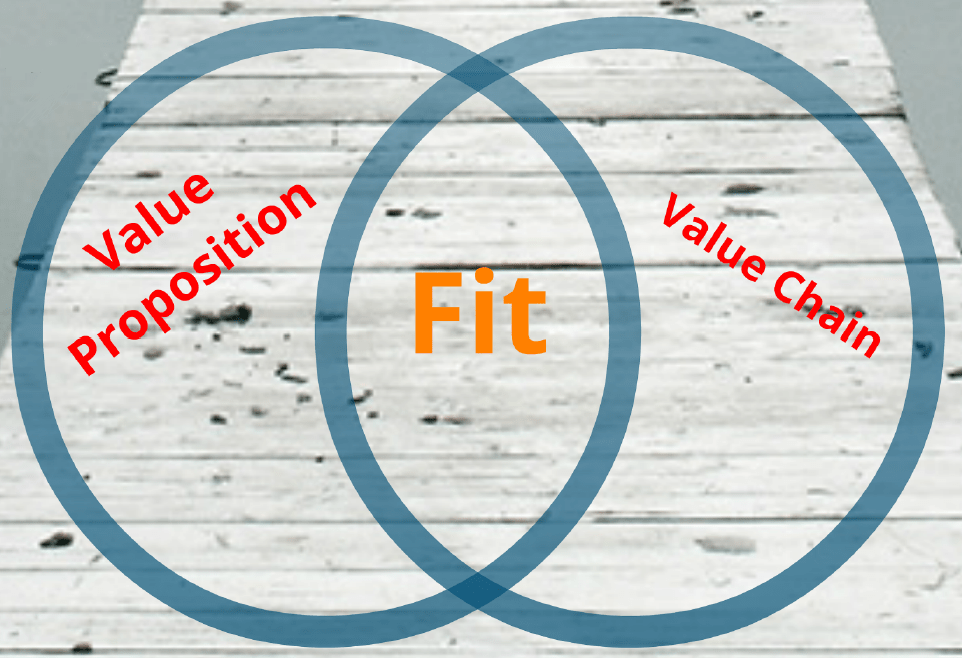
Strategy is, and should be simple.  It consists of 3 dimensions:

1. Value Proposition:  what your company does excellently, better than your competitors, that brings customers to your door

2. Value Chain:  all of the tasks and work your people do in order to deliver your value proposition

3. Fit:  how well you’ve aligned your people, processes, priorities, etc. with your value proposition

Seasoned CEOs and leadership teams tend to be good at developing strategy, which is where your competitive advantage is born. Effective execution puts legs on your value proposition. Without execution, your strategy and your competitive advantage are sunk.

Effective execution retains customers.  It’s where your value proposition thrives.  It  builds your brand.  And, it opens the door to success.

FORTUNE magazine, well known for its business insights, printed an article in 1999 called “Why CEOs Fail”, highlighting an important fact: 70% of CEO failures were caused by poor execution against the business strategy. 

Forbes magazine printed an update to that article on March 22, 2012, reaffirming this unfortunate statistic is still true today. Forbes listed examples of expedited CEO departures from companies such as BP, Hewlett-Packard, Bank of New York Mellon and Yahoo.

A 9/10/2019, article in Forbes by Jeroen Kraaijenbrink, “20 Reasons why Strategy Execution Fails,” the author wrote: “The success rate of strategy execution is incredibly low. The fail percentages found in scientific studies range from as low as 7 % to as high as 90 %, with an average of about 50%.”

And again, a 5/8/2020 article in SalesBenchmarkIndex.com, “How CEOs Masterfully Execute the GTM Strategy,” by SBI states that 63% – 74% of well designed strategies fail due to poor execution.

These companies had strong visions, business strategies and plans. So, these failures were not the result of poor business strategy. The challenge we face in today’s businesses continues to be in execution.

What can organizations do to succeed in execution? To respond to this key question, we’ll describe 6 keys to leading effective strategy execution.

1.  Strategic Understanding

How well does each member of your workforce understand who your competitors are, how they differ, and what it is that your business delivers that differentiates you from the competition?  Can each employee relate his/her role, skills and daily performance to delivery of your company’s unique, differentiating value?  Is this a regular topic of discussion at work?  From the production floor to customer service, to product design, purchasing and supplier effectiveness — all of the decisions made by employees throughout your value chain — is there an ever-present understanding and focus on your company’s value proposition?

2.  Leadership

Do your organization’s executives and managers have high credibility with the workforce?  How effectively do they lead and support people through necessary change to build the Fit between your value proposition and your value chain?  What are the creative, compelling communications your leaders provide daily to enable people to maintain their focus and to make decisions aligned with your strategy?  What level of involvement do employees have in anticipating and solving problems that impact strategic performance?

3. Balanced Metrics

What are the metrics used to measure and monitor your organization’s performance?  Are they aligned with your strategy, guiding decision making and prioritization? Is there a blend of financial (lagging) indicators and non-financial (leading) indicators?  Do people use the leading indicators to spot problems or obstacles early and implement solutions?  How often is performance on metrics reviewed and discussed, throughout your organization?

4.  Activities and Structure

Has your organization evaluated its processes, procedures, policies, budget, and organization structure, to identify ways to tighten alignment with the strategy?  Doing this effectively helps to remove obstacles to getting work done, and helps to standardize and automate the tasks required to deliver your promised, unique differentiating value to the customer. 

Frequently, initiatives, such as those for standardization or efficiency, have purposes and objectives that can conflict with and impede strategic performance.  This is often the case when an organization implements generic Best Practices.  Have your functional initiatives been aligned to fit the strategy of your company? How well are your people aligned with your company’s strategy? How many employees can describe your organization’s competitive advantage? Are “differentiation,” “value proposition,” and “company purpose” routine subjects of discussion?

Choosing strategic business goals and aligning operating goals across functions with the strategy is essential to keep people focused on what’s most important. Without effective alignment, emphasis on departmental measures can over-ride strategic focus or be mistaken as strategic focus. When an internal goal diverts focus, your value chain can be impacted and diverted.

The result of this shift in focus, when internal business goals overshadow competitive advantage as the top priority, often causes customer satisfaction to fall victim to the choices and decisions made by a provider during execution. For example, A memorable article in Manufacturing.net, “U.S. Vehicle Recalls Hit 9 Year High In 2013” demonstrates that collectively, several automakers, including Toyota, who has been touted as a model for producing quality for decades, unleashed 9% more poor quality on their customers, recalling 21.9 million vehicles via 632 recalls in 2013. You can probably cite other examples in the years since. Consider the implications of such dramatic failure to execute.

5.  Human Capital

One glance at a Standard & Poors chart tells a story all leaders need to know:  the value of intangible and tangible assets has actually made a complete reversal in recent decades.  Where in the past investors looked primarily at a company’s tangible assets such as bricks and mortar, machinery and equipment, to determine the value of a business — investors now look almost exclusively at the intangible assets such as intellectual capital, leadership credibility, brand, strategic relationships, execution capability and human capital. 

People are now the primary value.  Is your organization effectively investing in and leveraging the value of its people?  Is training aligned with the strategy?  Are new hires selected based on criteria that include ability to add strategic value?  Are employees placed in positions using their preferred skills and offering growth and autonomy?  Is the culture one of compliance in a command-control environment, or one of commitment in an environment of inclusion?

6. Market Discipline

Saying “no” is sometimes critical to business success. Business priorities can drive focus away from what’s most important to any organization — the competitive differentiation or value proposition.

Market Discipline is the context that keeps organizations and people on track to achieving competitive advantage. It’s the perspective and capability to say “no” in the moment of choice, when a decision will either fit the organization’s strategic differentiation or take focus away from it. Organizations who are weak in Market Discipline often find themselves trying (and eventually failing) to be all things to all people. Alignment of goals and people with the strategy is simple but not easy.

Revenue generation and development of new customers are frequent business goals. To be effective strategically, these must be put in the context of the business strategy. Without effective alignment, sales people may drive hard to succeed without targeting customers and customer needs that fit snugly within the organization’s strategy. For instance, they may expend time and resources trying to bring customers and orders on board that do not fit the organization’s sweet spot; these customers often have needs that are outside your organization’s current or planned capabilities or strengths. Consider the implications when cross-functional groups focus on side-tracks that are not relevant to the strategy.

Focus on the 6 components  above to strengthen your organization’s execution. Master the details in these basics, and you’ll make a difference.   

Please share your company’s practices as they relate to these questions.  What obstacles are you facing in strategy execution?

Copyright 6/7/2021 by Rosanna M. Nadeau

Image Sources:

  • Value Proposition/Fit/Value Chain – source: Prana Business
  • Leader in panoramic view – source: Pinterest
  • Six keys diagram – source: Prana Business
Image source: Pinterest

Are you interested in finding out about our Coaching Services?

Email: NadeauCoaching@outlook.com

Telephone: 603-801-2416

Message on Facebook LINK: http://Facebook.com/nadeaucoaching

The Secret To Developing Leadership In An Organization

Image source: Pinterest

When an employee is promoted from an individual contributor role to a role leading people, it is generally recognized that a change in perspective from individual to group and development of interpersonal and leadership skills are essential to success.

However, these aspects of leadership, while important, often fail to address the one change that can most impact individual and organizational success. The most important shift in thinking for a new leader is this: moving from focusing on your own accomplishments to thinking about your team’s contribution toward achievement of the company’s business strategy. This is what it means to adopt a leadership mindset.

Leaders have a unique and special opportunity and responsibility to create and sustain a work situation that brings out the best in their people. A leader’s success depends on the engagement and performance of the people s/he leads, versus on tasks or projects s/he completes as an individual. Focusing on the success of others begins with connecting them individually and as a group to the purpose and strategy of the organization.

Leaders at all levels must tell a compelling story explaining what makes the company different from its competitors, who the customers are and why they buy from the company. This story provides the context that aligns people and groups. This story is a cornerstone in establishing credibility as a leader and in developing employee engagement. Sharing this story is the first step in executing the business strategy.

Once you become a people-leader, providing this context for people is critical to the success of your team and to your success as a leader. This context is a beacon that aligns people in a unified direction as well as, over time, providing compelling reasons for organizational change. What is your plan as a new leader? How might your own manager support you in establishing your action plan to optimize your positive impact on your team?

A leader also communicates and develops people in a way that provides the kind of clarity they need to focus on what’s most important, take actions and make decisions on a day in and day out basis and to do all of that and more in alignment with the business strategy. In addition, in tethering your team to the strategy, you are teaching them how they can make a difference as individuals and as a group, you’re sharing leadership with them, and you’re developing future leaders.

Along the way, it is also important for leaders to continuously build and strengthen a wide range of knowledge and skills needed to be effective, including coaching, giving and accepting feedback, joint problem solving, teamwork, delegation, metrics, and others. But these skills, without building the team’s confident and effective understanding of the business strategy and how team members fit, are not enough to drive the organization’s growth and sustainability.

What are you doing as a leader, and what is the business story you’re sharing, to promote strong understanding and engagement of people in your company’s strategy?

Updated, copyright 6/6/2021 by Rosanna M. Nadeau; Copyright 12/19/2013 Rosanna Nadeau, Prism Perspectives Group, LLC

Image source: Pinterest

Are you interested in finding out about our Coaching Services?

Email: NadeauCoaching@outlook.com

Telephone: 603-801-2416

Message on Facebook LINK: http://Facebook.com/nadeaucoaching

Making Your Company An Employer of Choice

Image from Pinterest

As our nation continues to re-open and grow in 2022, many employers are seeking talent. They are looking for people in an environment where a pandemic swooped in following a years-long desert of opportunity, finding themselves collectively creating and navigating recruiting in the midst of a flood of new jobs. How can you, one employer in many, become a target destination for new talent?

Our Mini-Series, “The World Has Been Changing. Have You Adapted Your Business Strategy?” provides 7 levers of strategic success for small businesses. Part 2 describes the impact and role of the business strategy and of business leaders to build a strategic understanding and buy-in throughout their organizations. Buy-in requires an individualized effort to create unique relevance of the strategy to people. Use this LINK to check it out – LINK: https://rosannamnadeau.com/?p=4551

Our experience shows that in a competitive job market, it’s companies who can demonstrate the availability of both short and long term learning, growth, and advancement potential: Opportunity. The question in many minds is this: What’s In It For Me To Join Your Organization? It’s the question most candidates ask, silently — sometimes directly, in every interview.

It has become a norm to structure organizations to be “flat.” Flat organizations have concise organization charts and short chains of command.  So, what do today’s organizations tend to lack?  Opportunities to learn, grow and advance. For example, Assembler I, II, III — or, Technician I, II, III — or,paths for Assemblers to become Technicians and for Technicians to become Field Support Specialists. Career Paths that include both growth and advancement opportunities. 

Employees motivated by growth, learning or achievement can be demotivated when their desire to envision and realize a future with a company is not satiated.   To achieve skills and knowledge and to advance with a company is very satisfying. Companies providing such opportunity enable people fuel their desire to become more deeply engaged; they can envision chances to learn and to master new roles.  

The best employees thrive in environments that offer a future that includes growth and advancement.  Progression along career paths builds motivation, self-worth and performance, and improves employee retention.  These are ingredients of a Return on Investment for organizations. Career Pathing is an under-tapped driver of employee engagement, development, performance and, last but not least, retention of high performers.

Effective career paths are rooted in Behavioral Competencies and Skill Proficiencies.  Most of today’s organizations already use Behavioral Competencies as part of the performance review process. Typical examples of Behavioral Competencies in Manufacturing groups might include Teamwork and Problem-solving.  A Skill Proficiency is the ability to apply a specific skill meeting pre-set standards. 

For example, as an entry level machinist with ABC Machining Company, Sara must be proficient at using applicable safety equipment and procedures effectively, using one piece of equipment to produce parts to tolerances in tenths, and in using basic measuring tools such as verniers, calipers and gauges. 

To advance to the next level, Sara must, while in her entry level position, develop knowledge and skills that meet the proficiency requirements for the next level:  using two pieces of equipment to produce parts to tolerances in the hundredths and checking calibration of measuring tools, as well as knowing and applying all applicable safety procedures. 

Once Sara can consistently meet both the competency and proficiency requirements for the next level, she is ready for promotion.  People usually take great pride in advancing along a career path through learning and mastery of skills and competencies that are increasingly demanding and challenging.

Critical Elements of Career Pathing

  • A diagram or map that communicates the career growth and advancement opportunity that is available (to all employees)
  • Clear performance expectations including Behavioral Competencies and Skill Proficiencies
  • Processes to measure progress, providing employees and their supervisors with visibility to individual (and, ideally, team) performance results
  • For higher level positions: succession plans supported by individually tailored development plans

 Keys to Success in Career Pathing

  • Involve managers and supervisors to understand the types of knowledge and experiences required for success in each role along the career path
  • Identify specific, detailed behavioral competencies and skill proficiencies for each position along the career path
  • Establish development processes and individual plans to help people to advance along the career path
  • Align career paths, behavioral competencies, skill proficiencies and development processes with the business strategy
  • Create path intersections and entrances from different starting points to each end point
  • Design career pathing to fit the culture of your organization
  • Integrate the behavioral competencies and the skill proficiencies with the hiring and selection process
  • Prepare a comprehensive communications plan to educate managers and employees
  • Establish simple, frequent methods of providing coaching and feedback. This includes communication from supervisors and managers, as well as built-in methods for employees to see how they are doing, on the job.

Summary

There are innumerable benefits to organization as well as to their people to enabling career pathing opportunity. The primary reasons include the following:

  • Engages, develops and retains the best talent
  • Builds a culture of achievement and opportunity
  • Builds organizational performance
  • Provides a pipeline of talent throughout the organization

Just about every organization can design career pathing.

Next Steps

What’s in it for people who join your organization?  Will they be able to see themselves learning, growing and advancing?  Will they find jobs or careers there?  Providing career paths that interest and challenge people engages them.  Does your organization have career paths for your people?  Are these career paths aligned with the business strategy?  Either way, there are implications for the business.

What actions can you take to better enable learning, job satisfaction and growth through and for your workforce, be it large or small?

Comments? Examples? Please share them here.

Photo by Pixabay on Pexels.com

Are you interested in finding out about our Coaching Services?

Email: NadeauCoaching@outlook.com

Telephone: 603-801-2416

Message on Facebook LINK: http://Facebook.com/nadeaucoaching

Join our new Facebook Group LINK: www.facebook.com/groups/405884627320359/

“The World Has Been Changing. Have You Adapted Your Business Strategy?” Part 2 LINK: https://rosannamnadeau.com/?p=4551

The Human Resources Employee Relations Function: A Strategic Value-Adder

Image source: Dreamstime

Employee Relations is one of the most important Human Resources activities in the company, because it is through the problem-solving and coaching, often in very difficult situations, that work relationships and trust can be built or broken.  Decisions and actions are made that demonstrate the organization’s real values and its philosophy about people.  Employee Relations professionals tend to develop individual work relationships with employees as well as with teams, and are best positioned to have their fingers on the pulse of the workforce.

Traditionally, Employee Relations has been a primarily reactive function, responding when H.R. is called in by a manager or by an employee to help resolve a problem — a complaint of harassment, such as offensive behavior of a sexual, racial, or religious nature or a violation of a company policy i.e. safety, attendance/absenteeism, bullying, or drugs/alcohol or, a conflict between 2 people.  It’s critical that the issue be looked into and addressed very quickly.   Disciplinary action is a frequent resulting action by management, though not always.  Sometimes it’s an issue of unacceptable employee performance, and a Performance Improvement Plan is put in place to help an employee get his/her performance on track to meet job expectations.

Employee Relations professionals are usually experts in company policy and employment law, and we have observed that the use of legal counsel has continued to grow over the past decade in management’s effort to ensure compliance with increasingly changing and often-complex legislation and workplace situations.

But, is that the sum total of the potential value of the Employee Relations function?

Today’s organizations have smaller Human Resources departments, and at the same time they need highly engaged employees to compete effectively.  We have observed that Employee Relations can be a high value resource to organizations.  Employee Relations people can build a wealth of knowledge about individuals and groups, including the following examples:

  • Management/Leadership styles of supervisors and managers
  • Leaders’ Credibility
  • Work climate
  • Training quality and quantity
  • What motivates employees
  • Receptiveness of leaders to employee suggestions
  • What ideas employees have to improve products, processes and services
  • How supervisors and managers guide people through change
  • The frequency and content of communication to employees about the business , customers, competitors, and what unique value the company promises to customers that makes customers buy from the company
  • Quality and frequency of performance feedback including metrics
  • How sensitively and constructively leaders address performance or behavior issues
  • Employees’ views on pay and benefits
  • Employees’ views  on training and advancement opportunities
  • Fairness and Favoritism
  • Who goes the extra mile, helps other people,  and /or volunteers

This is a long list but it merely scratches the surface.

When Employee Relations is done as a proactive activity as well as reacting to problems, the organization can have access to important information that can guide initiatives, changes, and development programs.

In this scenario, Human Resources presents information and updates for discussion with organization leaders often, regularly.  This information is used to identify appropriate actions to take and changes to make to build and sustain employee engagement and performance.  For example:

  • Incentive programs may be created or revised
  • Recognition programs may be developed
  • Awards may be changed
  • Career paths may be designed into the job hierarchy
  • Training plans may be developed
  • Gamification may be introduced
  • Suggestion Programs may evolve
  • Balanced metrics can be established to monitor engagement and its impact of the business

To become well-versed on the organization and the people, Employee Relations staff in this proactive environment orchestrates an effective array of activities, i.e.:

  • Conducts 1x1s with employees
  • Plans and facilitates focus groups on key business topics
  • Puts in place small group sessions for employees to meet informally with senior managers
  • Visits work areas
  • Attends team safety and staff meetings, observing behavior and reading reactions.
  • Understands the jobs that are done and the skills and personal qualities required
  • Understand the business
  • Provides feedback and coaching to supervisors and managers to help them improve their impact
  • Supports managers in providing involvement opportunities to employees in improving products, processes and service delivery policies to better align these with the business strategy

By leveraging your Human Resources staff this way, management can remain in touch with the workforce and more confidently buy-in to engagement initiatives that can only succeed when they prioritize and practice them on a daily basis.  When this happens, annual surveys add value by providing employees with opportunity to have a voice en mass.  And, survey data is not surprising to managers because they are already aware of and acting on issues.

We believe strategic employee relations can be an integral component of engagement  impacting an organization’s readiness and ability to deliver its unique value to its customers.

What do you believe Employee Relations can contribute?    Should it be a hygiene activity or a strategic value adder? What is the current role of Employee Relations in your organization?   What are the needs of your business?  What changes might enable higher value from your Employee Relations function?

Rev and Copyright 06/03/2021 by Rosanna M Nadeau; Copyright 10/10/13 by Rosanna Nadeau, Prism Perspectives Group, LLC

Image source: Pinterest

Are you interested in finding out about our Coaching Services?

Email: NadeauCoaching@outlook.com

Telephone: 603-801-2416

Message on Facebook LINK: http://Facebook.com/nadeaucoaching

Manufacturing Metrics and The Yellow Brick Road

Most organizations use metrics as measuring sticks, showing people how the organization is doing. Many management teams use a Balanced Scorecard, including both financial (lagging) measures and non-financial (leading) measures. Lagging measures show us results that have occurred, after the fact. Leading measures show progress at a designated point in time, allowing time for people to take corrective action when necessary to achieve a goal.

These are all important for business performance. But metrics can deliver much greater value to a business. The best metrics serve as a clearly marked path leading to achievement of the strategy, just as the Yellow Brick Road took the legendary Dorothy and her cohorts to see the Wizard. The Yellow Brick Road was clearly visible to the famous Oz adventurers at all times, enabling them to take the most direct route.

It is the responsibility of leaders to create a strategically aligned Yellow Brick Road for their people, solidly constructed of balanced metrics and communication. By focusing everyone on delivering the company’s unique, strategic value, strategic goals can provide an all-encompassing context for performance and change.

Choosing Metrics

Effective metrics are measures that:

  • Are aligned with the Value Proposition, the company’s unique value that attracts and retains customers
  • Are relevant to each employee because they fit the work and/or services performed in the department/work unit
  • Employees can impact by what they do and how they do it, providing meaning and a personal level of connection with the business that sets the stage for their contributions

Ensuring Metrics are always visible:

  • They are posted, updated and discussed often, even daily
  • Individual and group recognition, rewards and incentives are based on performance against metrics
  • Employees can easily access information showing how they (individually and as a group) are doing

Is your company managing metrics for maximum performance? Or is performance being diluted by undermining cultural norms and values, distractions and low/no-value work? These are key questions as you begin to re-visit, and potentially, re-design your metrics implementation.

Please help enrich our discussion – share your opinions, experience and knowledge.

Recommended Reading:

“The Strategy-Focused Organization,” book by Robert S. Kaplan and David P. Norton

“Creating Competitive Advantage,” book by Jaynie L. Smith with William G. Flanagan

“Performance Scorecards,” book by Richard Y. Chang and Mark W. Morgan

Rev, Copyright 6/2/2021 by Rosanna M. Nadeau; Copyright 5/6/2014 by Rosanna Nadeau, Prism Perspectives Group, LLC.

Image source: Pinterest

Are you interested in finding out about our Coaching Services?

Email: NadeauCoaching@outlook.com

Telephone: 603-801-2416

Message on Facebook LINK: http://Facebook.com/nadeaucoaching

Training: A Strategic Investment

A global survey by HCM Advisory Group found that 48% of executives view their company’s learning function either as a necessary but high-cost contributor or sunk cost.

52% see the learning function as a strategic enabler for the organization.

86% of the survey participants were US companies.

Transfer of learning to the workplace is what makes training a strategic enabler, providing knowledge and skills that participants actively, successfully apply on the job to make a positive difference for the business. When there is inadequate transfer of learning from the classroom to the workplace, training is a sunk cost, equivalent to money lost that cannot be recovered.

Based on the skill gaps we’re experiencing as we struggle to move from the pandemic to growth, it’s clear we need to focus on building sustainable organizations. We must develop our talent to meet both current and future business needs.

Planning and delivery of training requires knowledge of adult learning, retention and behavior change. For training to be leveraged to achieve your business strategy, skillful programming design and implementation will be essential for your organization’s success. The purpose of this article is to support the successful implementation and impact of your training and development investments.

Following are 3 actions to build the strategic value of training for your organization.

Align training with the business strategy. Training is long recognized as a tool for behavior change and performance improvement. Its value is maximized when clearly connected to your business strategy.

So, a first step may well be to train all employees in the business strategy, especially focusing on the company’s differentiation/value proposition. Employees need to have a clear and up to date personal understanding of the strategy and be able to discuss your customers. Everyone needs to be able to articulate the company’s products, services, key competitors and how they contribute to the company’s competitive differentiation.

To benefit from strategic alignment, it is essential that each and every employee have a clear vision of how s/he impacts the company differentiation/value proposition and affects achievement of the strategy. This not only helps to build engagement, as it is is recognized today that engagement helps build performance.

To foster this alignment, the training team can partner with executives to ensure there is an effective annual review of business needs and the strategy, and identify training and development programming that will equip employees with the knowledge and skills to perform the work needed now and in the future for the organization to execute its strategy.

Expand your learning function’s contributions. Per HCM’s survey report, learning functions that are viewed as strategic enablers are:

6% more likely to deliver training to customers.

8-9% more likely to deliver training to partners/channels.

4-6% more likely to deliver training to suppliers

25-42% more likely to report that training is aligned with business strategy.

Twice as likely to use objective measures of employee performance to align their learning to the business strategy.

Twice as likely to do formal learning requirements planning.

Four times more likely to have a learning advisory board with members from the business and the learning function.

26-43% more likely to have an annual process of mapping the learning strategy to the business strategy.

39% more likely to have been demonstrating the impact that training has on the business.”

According to the Association for Training and Development (ATD), companies who invest in formal training have a 218% higher income per employee than companies who do not have formalized training. In addition, companies with formalized training have approximately 24% higher profitability than those who don’t invest in training.

Training also helps retain your people. 40% of employees who do not feel they receive adequate training to be successful in their jobs leave within the first year. In other surveys, 70%-87% of employees stated that professional development and career growth opportunities are important criteria for deciding to stay or to leave their jobs. And, in a survey of 4,300 workers, 74% felt that they weren’t achieving their full potential at work due to lack of development opportunities.

Set up your organization for success. Design training such that transfer of new skills and behaviors is programmed into the delivery process. In addition, partner with line managers to build an environment conducive to this transfer from the training room to the workplace.

To design your training for effective learning transfer, experience has shown that content in all-day and/or multi-day training programs is not nearly as likely to be retained and subsequently applied on the job as training programs that are broken into 2-4 hour blocks delivered in consecutive weekly sessions. This is especially important when the training is focused on behavior change.

Research shows that learning and retention of training content are significantly enhanced when quizzing, testing and varied learning activities are built into training. This may include scheduled quizzes and/or tests as well as in-class or outside-class exercises or projects that require reference to and repetitive application of the learning content. Following training completion, managers can support employees in locking in concepts and practicing them to convert new knowledge into skills through observation and feedback.

Without these measures, learning from training can quickly be forgotten as the participants return to the routine of work and leave concepts from the classroom behind. Learning transfer is the biggest challenge for employees and a critical component for training impact. Knowledge transfer requires support and measurement to be effective. It is transfer of learning to the job that brings a return on investment to the organization and training participants.

A training function that is seen as a strategic enabler, contributing to the organization’s current and future success, is valued and more readily funded despite the intangibility of its “products.” It’s also less likely to go to the chopping block when cost savings are required in an organization.

Finally, today’s challenging business environment is right — it’s better than ever before – to make strategic impact through employee development. Today, it’s people that are the most critical strategic assets a company has. It is this reality that uniquely positions your training function to make a difference.

Consider these questions:

How is your organization leveraging training as an integral component of your Human Capital strategy?

Is training viewed by employees and leaders as value added? As a strategic enabler? Or is it seen as a cost center, or as sunk cost?

Whatever your starting point, map your steps forward. Your learning function can make an increasingly meaningful, lasting, positive impact on the business and its people.

Resources/Recommended Reading:

Mind-blowing Statistics that Prove the Value of Employee Training and Development – Link: Mind-blowing Statistics that Prove the Value of Employee Training and Development (shiftelearning.com)

Copyright 06/01/2021 by Rosanna M. Nadeau

Image source: Pinterest

Are you interested in finding out about our Coaching Services?

Email: NadeauCoaching@outlook.com

Telephone: 603-801-2416

Message on Facebook LINK: http://Facebook.com/nadeaucoaching

Share this: