The World Has Been Changing. Have You Adapted Your Business Strategy? – Part 4 –

Image Source: Unsplash

During that past few weeks, we’ve shared our perspective on several of the seven levers to strategic success. You’ve considered identifying actions you can take to develop or enhance the following components of your strategic framework:

  • Market Discipline or Focus
  • Strategy Map
  • Strategic Understanding & Buy-in
  • Balanced Metrics (or Performance Indicators) and Scorecard

Part 4 focuses on People and Activities & Structure.

7 Levers to Strategic Success

  1. Market Discipline or Focus
  2. Strategic Understanding & Buy-in
  3. Balanced Metrics/Performance Indicators
  4. Scorecard & Business Performance Reviews
  5. People
  6. Activities and Structure
  7. Leadership

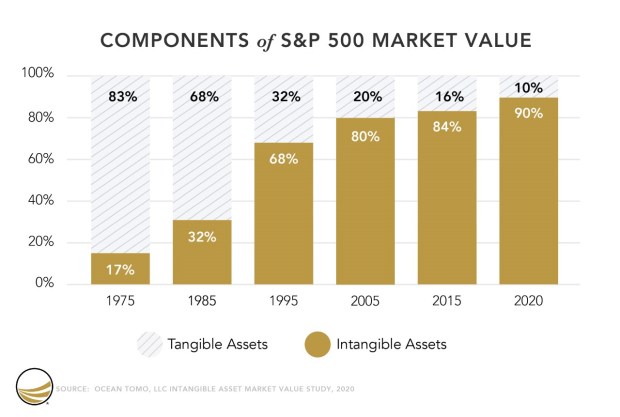
People: Intangible Assets

Use of Image Authorized by Source: Ocean Tomo

One of the most significant developments in business during recent decades has been the dramatic shift in the valuation of company assets.

A Look At Assets

Tangible Assets are physical and/or financial. Examples include Land, Buildings, Equipment, Vehicles, Cash, Supplies, Accounts Receivable, Stocks, and Bonds. These assets are concrete examples of worth, demonstrable through documentation. These can be used as collateral for financing that can be used to continue as well as expand and invest in operations.

Intangible Assets are not bricks, mortar or machines. They are not financial. Examples include People (referred to as Human Capital), Intellectual Capital, Intellectual Property, Goodwill, Brand Recognition, Customer Loyalty, and Market Share.

Implications of the “Components of S&P Market Value” Chart

Since 1975, the value of intangible and tangible assets has been turned upside down, as intangible assets soared from 17% to 90% of the total assets in the S&P 500 in the USA while tangible assets decreased to 10%. Intangible assets have clearly become most important for organization success in today’s business environment.

The Extraordinary Evolution of Asset Value

There are some experts who have stated that asset values have changed because of the advent of the internet. But, it’s not that simple.

In CEO Daily, a Fortune Magazine newsletter, Alan Murray shares a much bigger-picture perspective. He writes: “The three great business trends of our time–1) technology-driven transformation, 2) reinvention of office work, and 3) increased attention to social and environmental goals–are all closely related…The source of business value in the 20th century was access to capital, access to natural resources, investment in infrastructure –plants, stores, trains…It was a physical world and controlling financial and physical capital gave you the edge. Capital is plentiful, physical resources have lost value, and intellectual property rules. The way to win the game today is to attract the best and brightest talent.”

Certain types of assets are more valuable than others. Intangibles such as knowledge, business methodologies, computerized data, brand recognition and customer/supplier relationships can make a more significant contribution to business success than buildings, equipment, and machinery. In fact, some intangible assets enable competitive differentiation from competitors and can help increase a business’s value by supporting a powerful reputation, name recognition and respect among customers.

Some intangible assets have the potential to build and leverage knowledge and skills to contribute to the business in many ways, such as promoting sales and fighting the competition. These intangible assets, that can drive such value, are typically known in business as Human Capital; they are the best and the brightest that Alan Murray refers to. They can influence the value of all other assets.

But, a critical point to keep in mind is this wise observation from PeerComps’ article dated July 8, 2019, “Intangible Assets: What They Are and How They Can Add Value to Your Business “… the development of these intangible assets is essential to the long-term life of a business. Of the 5.4 million firms with employees operating today, seven out of 10 new firms only survive about two years, and a big part of that is a lack of intangible assets.” (source: PeerComps – see Recommended Reading below)

People: Human Capital

Photo by fauxels on Pexels.com

And, so it is our workforce — our people are the intangible asset we refer to as Human Capital, now holding a uniquely critical priority in businesses today. When it comes to executing the business strategy, people do the work. When it comes to intellectual capital, people create it. When it comes to building brand recognition, customer loyalty, and supplier relationships, it is people who do it. In 2022, the knowledge and skills of an organization’s workforce exert powerful influence on both short-and-long-term business success.

We believe the data provided in the Ocean Tomo asset value chart above is useful in helping leaders to re-shape and re-align their leadership strategy and practices with current business needs. It informs leaders about the continually changing value of their organization’s intangible assets.

The data and our own experience make it clear: human potential is the primary source of competitive advantage in today’s organizations.

Therefore, it is up to business leaders to acquire, develop, inspire and actualize the potential in their people–and, to retain talent.

We know in our minds that people should be our greatest asset. Many organizations say they are. Does your organization treat people as its greatest asset? Organizations who believe that people are their greatest asset take actions to invest in and leverage this asset. They customize jobs to fit people’s skills, knowledge and preferences as well as business needs.

There are many ways they can do this, bringing value to their people and to the business, both short-and-long-term. Refer to Recommended Reading for detailed examples.

Activities

The work tasks, processes and projects your people do form the foundation of your competitive advantage. When these are aligned with your business strategy, and people have a solid understanding of how they contribute to delivering the strategy, they can effectively prioritize their daily activity, and can understand how their efforts, decisions and actions lead to creating the unique customer value that is your value proposition to your customers.

The design of work tasks, processes and projects offers a valuable opportunity to leaders that is often overlooked. Each role in an organization can be set up to provide meaning and value in the eyes of the employee doing it.

This can be done by considering both the business needs and the employee’s skills, knowledge and interests, in shaping the role. A strategic understanding of the business offers people a cause they can sign up to support; and we can take that commitment to another level by tailoring the role in aspects such as scope, task flexibility, and decision making authority, so that the assigned employee can find meaning and fulfillment in making their contribution to the organization’s strategic success. When this happens, it brings fresh energy and even passion for the work itself.

We know that an effective Strategy Map and Balance Card can enable ongoing improvement in strategic performance for organizations. A related but sometimes unrealized benefit of your Strategy Map and Scorecard is the use you can make of them to involve and leverage the capabilities of your people in conducting analyses of your Value Chain; you can involve them in following that analysis by helping to target and drive improvement in operational effectiveness and efficiency. Driving change and improvement with the involvement of your people will can result in a marked improvement in job satisfaction and strategic execution. To learn more about Value Chain analysis see the Recommended Resources below.

Structure

It is a basic function of Leaders to build an organization that can effectively pursue the direction set by the business strategy, and to do so in alignment with the company culture and leadership philosophy. This is complex, because the design of the organization structure needs to optimize the ability for people to use information, materials, systems and processes, as well as to work and communicate easily with each other, to execute the business strategy and achieve its goals.

There are many types of organization structures. The structure chosen will have influence communication and decision making authority. These are two important considerations due to the impact on job roles, autonomy, teamwork, information sharing and collaboration. The structure can streamline communication or inhibit it; it can make it easier or more difficult to get things done; it can provide or withhold job autonomy; it can help ensure the right people have input on different types of decisions.

An organization structure that fits one company may not fit another. There are three standard designs that form the basis of most organization structures. They are:

  1. Functional
  2. Departmental/Divisional
  3. Matrix
  • Functional structures group people by function, such as Finance, Manufacturing or Human Resources.
  • Departmental or Divisional structures group people by product line, business unit or plant.
  • Matrix organizations are a blend, grouping people either by function or by department/division and requiring employees to report to two managers, one functional and one departmental.

Refer to the recommended resources below for additional information that may be helpful as you start researching tools to assess and consider changing your organization structure.

Summary

When people are recognized as the top value business asset, as the intangible assets who create other intangible assets for the organization, the need to attract, develop and retain people continues to grow. As we move through the pandemic, and employee expectations have continued (and may continue) to change, companies will need to find new ways of building ties that foster commitment and with it, longer term employment.

We feature this image of Old Dominion as a powerful example of the messaging of purpose that today’s businesses need to deliver to their people to build understanding, buy-in and commitment. We are willing to bet that Old Dominion has established themselves as a leader in their industry as as well as a leader of people.

What is the purpose and message your organization is driving?

Next Steps

Series Step 4

Activity 1: Consider questions such as these as you think about the Activities and Structure of your organization. Document your thoughts and ideas.

  • Do we all use our knowledge of the strategy to help prioritize our daily activities and to-do-lists?
  • How well does our organization structure support and enable the strategy?
  • Does my team understand how our efforts, decisions and actions lead to creating our unique customer value?
  • How well does my team understand our competitive advantage and the value proposition we offer customers?

Activity 2: Think about the purpose/vision shown in the Dominion Freight image above. What might be the effect of such a statement on customers? On employees? On work activities? On organization structure?

Action 3: Read and research the Value Chain and the types of improvement charting and analyzing it could potentially generate in your organization.

Action 4: Consider your organization’s culture, values and leadership practices as these relate to achieving your business strategy. What steps might you take to assess and improve the strategic effectiveness of these core elements of your organization?

Activity 5: Think about how you might provide employees with the opportunity to find individual meaning in the work they do. Do jobs require development and use of an individual’s preferred skills? Is learning and growth available that aligns with employee career and advancement aspirations? What can leadership do with job assignments that can improve the sense of satisfaction each employee finds in doing their job day in and day out?

What are your thoughts on Part 4 in our series?

Please tell us! What has your company’s experience been with developing and leading with Strategy? What metrics have you discovered to be most effective in the past? What will you do differently now? Please share your questions, results and comments with us! You’re welcome to contact us at your convenience.

Other segments in this mini-series

The introduction segment: “Sometimes, in business and in life, we find wisdom not in what people think, but in how they think” LINK: https://rosannamnadeau.com/2022/01/21/sometimes-in-business-in-life-we-find-wisdom-not-in-what-people-think-but-in-how-they-think/

Part 1 “The World Has Been Changing. Have You Adapted Your Business Strategy? Part 1” – Market Discipline or Focus – LINK: https://rosannamnadeau.com/2022/01/19/the-world-has-been-changing-have-you-adapted-your-business-strategy/

Part 2 “The World Has Been Changing. Have You Adapted Your Business Strategy? – Part 2” – Strategic Understanding & Buy-in – LINK: https://rosannamnadeau.com/2022/01/19/the-world-has-been-changing-have-you-adapted-your-business-strategy/

Part 3 “The World Has Been Changing. Have You Adapted Your Business Strategy? – Part 3 – Balanced Metrics – LINK: https://rosannamnadeau.com/2022/01/26/the-world-has-been-changing-have-you-adapted-your-business-strategy-part-3/

Part 4 “The World Has Been Changing. Have You Adapted Your Business StrategY? – Part 4 – LINK: https://rosannamnadeau.com/2022/01/30/the-world-has-been-changing-have-you-adapted-your-business-strategy-part-4/

Part 5 “The World Has Been Changing. Have You Adapted Your Business Strategy?” – Part 5 – LINK: https://rosannamnadeau.com/2022/01/31/the-world-has-been-changing-have-you-adapted-your-business-strategy-part-5-2/

Additional Resources

“What is Value Chain Analysis,” Harvard Business School On-Line – LINK: https://online.hbs.edu/blog/post/what-is-value-chain-analysis

17 Types of Organization Design and Structures – LINK: https://www.aihr.com/blog/types-of-organizational-design/

“Organizational Structure: How to Create or rebuild One,” – LINK: https://www.insperity.com/blog/organizational-structure/

“The Top 10 Signs It’s Time to Change Your Organization Structure,” – LINK: https://organizationalphysics.com/2019/02/26/the-top-10-signs-its-time-to-change-your-organizational-structure/

“Do You Have a Well Designed Organization?” – LINK: https://hbr.org/2002/03/do-you-have-a-well-designed-organization

Free Educational Resources

LINK: https://lessons.online.hbs.edu/?_ga=2.112300612.1957100363.1643561546-1783180230.1643561546

Free E-book Download from Harvard Business School On-line

Contact Us!

Photo by Pixabay on Pexels.com

Would you like to find out more about our coaching services?

Phone: 603-801-2426

E-Mail: NadeauCoaching@Outlook.com

Comment:

Join our new Facebook Group, Friends of Nadeau Coaching – LINK: www.facebook.com/groups/405884627320359/


Are you About to Start a New Job?

Now’s the Time to Develop Your New Job Action Plan!

Image source: Dreamstime

Congratulations! You’ve landed the job you want. Now, do your homework and get prepared! A new job is a wonderful opportunity, so why not get ready to hit the ground running?

Research has shown that using a systematic approach in starting a new job can help new employees get up to speed as much as 50% faster1, which means you are making a contribution to the company more effectively, and earlier than without a plan. While no action plan can guarantee your success in a position, it can be very helpful when used with the support and agreement of your new boss. Set yourself up for success with a written action plan, and when the time is right, for example, during day one or day two at your new position, discuss it to obtain input, feedback and support, one-on-one with your new boss.

So, if you’re still reading this article, you’re interested in learning more about using this tool. Using a New Job Action Plan with your boss’s approval can help ease your transition into your new position. This article is targeted for individual contributors — that is, people whose roles do not include leading, supervising or managing people. Those positions have a number of different and additional, specialized goals and actions/steps. If you’re about to start a new position leading people, contact us for information about that type of action plan.

Let’s get started. We recommend developing a plan with three 30-day parts, so you’re covering 90 days. Each 30-day segment will lay out your goals. As you reach the conclusion of one 30 day plan, you’ll be ready to set up your plan for the next 30 days.

Remember, regular, frequent communication with your boss is a critical aspect of getting off to a strong start in a new job. You’ll continue to see reminders of this as you read on.

The first 30, 60 and 90 day time periods are key timeframes for your ramp-up. Once this transition phase is complete, it will be time to develop a longer term plan.

Learning is a high priority during the first 90 days of employment, and organizations typically provide on-the-job training, on-line courses and/or in-person group training. Success in a new job requires an open mind, flexibility and commitment to learning. Possessing directly related prior work experience is not enough to make a new hire successful in a new job. Chances are, there will be differences that impact the work being done and the procedures followed, due to variables such as business policies, customer requirements, equipment, technology.

Three aspects of transition into a new position are included in our New Job Action Plan: Learning, Job Performance and Work Relationships. These are typically recognized as essential components for both short-term and long-term success, so it makes sense to give them high priority early in your employment, including the during first 90 days.

The First 30 Days (Day 1 through Day 30 of Employment)

Typically, the first month on a new job is focused on learning, performance and work relationships, with an emphasis on Learning. Your Action Plan is a tool that begins with setting goals with desired outcomes or success measures, and identifying actions or steps with target dates for completion. This is simplified by using S.M.A.R.T. Goals; this acronym stands for Specific, Measurable, Attainable, Relevant, and Time-Bound. S.M.A.R.T. Goals are achieved through well-planned Actions or Steps that are also time-bound. Check out the two examples below; can you identify what makes each of the two goal statements Specific? Measurable? Attainable? Relevant? and Time-Bound?

S.M.A.R.T. Goal examples:

  1. Pat will increase his walking from 7,500 steps per day to 10,000 steps per day as measured by his smart-watch, Monday through Friday, starting September 1, 2021, through November 30, 2021.
  2. Sam will complete a 6-month gymnastics program on Tuesdays, Thursdays and Saturdays between July 19, 2021 and March 1, 2022 to be able to successfully perform her assigned series of back-flips, splits and rolls on a matt for her team’s routine on March 15, 2022.

Learning goals: To establish these, discuss questions such as these with those involved with supervising and training you, beginning with your boss, and, if he/she agrees, with others such as trainer and group/team leader: “What knowledge and skills do I need to develop, to perform this job with excellence? How can I best develop the needed knowledge and skills? and “What levels of proficiency do I need to achieve within the first 30 days to be on track to perform effectively?”

Performance goals: These are typically determined through discussion between an employee and his/her boss. Typically, several S.M.A.R.T. goals would be established, which are directly supported by Learning goals.

Work Relationship goals: Your boss is a good resource to help you make a list of people you should initially plan to work with and get to know and to plan your initial actions/steps for relationship building. These individuals may include those who are job-related internal customers and suppliers, peers with whom you’ll work with closely, your buddy/mentor and trainer(s). Once you identify them, develop Actions/Steps by asking yourself, “How can I establish and foster those relationships? How can I demonstrate to them that I’m trustworthy, credible, and committed to excellence?”

Following are examples of goal areas that may help you to develop 30/60/90 day goals and actions/steps in Learning, Work Relationships and Performance. The next step is to practice. Try this approach:

  1. Select one goal area that would fit your new job, from the Learning examples below.
  2. Develop a S.M.A.R.T. goal for that goal area.
  3. Using the questions in the thought process described above, identify three to five actions/steps that would result in meeting the S.M.A.R.T. goal you just set.
  4. Now, establish start dates and completion dates for the actions/steps you listed.
  5. Now you’ve begun the process of developing your New Job Action Plan.
  6. Practice this with each of the categories below — Learning, Work Relationships and Performance. Anytime the samples below don’t fit your new job, develop goal areas that will fit. Soon you’ll have mastered the planning process.

Examples of Learning goal areas

  • Job purpose, scope and responsibilities
  • How the role fits into the company and contributes to its purpose and goals
  • Job-specific knowledge and skills
  • Job-specific, internal customers and suppliers
  • Internal procedures
  • Company policies and work rules
  • Company products, services, customers
  • Company culture

Examples of Work Relationships goal areas

  • Boss and Team/Group Leaders
  • Buddy and/or Mentor
  • Trainer
  • Co-workers
  • Internal Customers
  • Internal Suppliers

Examples of Performance goal areas

  • Complete Sales calls
  • Machine airplane parts
  • Ship orders
  • Complete Quality Inspections

The 30-60-90 action plan is a building process. This tool is useful in helping you to partner effectively with your boss and colleagues, to manage your transition into your new role. The purpose is to support your efforts in becoming productive and capable of contributing to the organization effectively, to meet your new boss’s expectations of you in your new role. It’s important to take notes as you work with others to build your knowledge and skills for your new role. By taking quick notes and beefing them up on your own time will help you to lock in information that was shared with you and will demonstrate your commitment to learning from the time spent with colleagues.

Following are some general examples of what each 30-day period might include. However, it is important to your success that you discuss and finalize action plan with your boss’s input, support and approval, to make sure you’re heading in the right direction.

Examples of a 30-60-90 thought process:

The first 30 days are usually about getting up to speed on your job responsibilities, your boss’s expectations of you, job procedures and the company as a whole. It’s an opportune time to begin building work relationships and developing job knowledge and skills that are key to success here, at the new job. Some of your goals and actions/steps might include reading company material, learning to use email, job-related computer tools, company policies and procedures. Some performance goals may focus on specific learning and carrying out your role in providing company products and services. As you begin to carry out some of your job duties as a trainee, you’ll have questions. Should you reach out to your trainer to ask each question as it comes to you? Or, should you write them down and cover them in a brief meeting? This is something your trainers will usually be very happy to help you decide.

The second 30 days are more focused on increasing your ability to work effectively on your own, with less need for guidance. You’ll be strengthening your knowledge of your fit in the organization, and the purpose of your role in the department and the company, and enable a better understanding how the job you do and how you do it affects other individuals, departments, and customers. You’ll be building work relationships and establishing a track record that shapes and defines your reputation in the organization.

The third 30 days are often about increasing your ability to perform your job effectively and more independently. It may be a time when you can begin taking initiative on improving your work quality, efficiency and effectiveness. Soliciting feedback periodically from your boss and internal customers to continuously improving your performance in terms of will probably continue to be focus areas for goals, actions/steps into the future. In addition. you may begin joining company sponsored extracurricular activities.

We have developed a template you can use and tailor to write your New Job Action Plan. We are pleased to offer it to you to save your time in creating one yourself. Contact us using the information below to get yours.

We hope this article and the tools it provides will inspire you as you set off on your new job path. Please share your thoughts, experiences using it, opinions and ideas.

Recommended Reading:

1 “Seven Ways to Set Up a New Hire for Success,” by Michael D. Watkins, Harvard Business Review, May 10,2019

“13 Things Every New Employee Should do in Their First 90 Days On the Job” Forbes Article LINK: https://www.forbes.com/sites/forbescoachescouncil/2019/03/05/13-things-every-new-employee-should-do-in-their-first-90-days-on-the-job/?sh=2f3cbcd75a21

“10 Tips for Being the New Employee,” Inc Article LINK: https://www.inc.com/drew-hendricks/10-tips-for-being-the-new-employee.html

“The Everything Guide to Being the New Employee,” by Kristin Wong article LINK: https://medium.com/s/office-politics/the-everything-guide-to-being-the-new-employee-524da4d27682

“How to Handle Being a New Hire,” Monster article LINK: https://www.monster.com/career-advice/article/how-to-handle-being-a-new-hire-hot-jobs

“Starting a New Job? 7 Tips to Ensure Your Success,” by Ronda Suder LINK: https://www.topresume.com/career-advice/7-basics-every-new-hire-should-know

Join our Facebook Group: Friends of Rosanna M Nadeau Link: https://www.facebook.com/groups/405884627320359/

The World Has Been Changing. Have You Adapted Your Business Strategy? -Part 2-

Photo by Zuzana Ruttkayova on Pexels.com

In Part 1 of this new mini-series, you jump-started your first steps to review, assess, create and/or adapt your business strategy, to tighten its fit with changes in the business environment and customer needs. Your initial activities included information gathering and reflection on key questions, to inform your choice of your business’s Specialty from among three alternative business directions, to establish your Market Discipline or Focus.

Where Are We Going?

Now, in Part 2, you’ll have the opportunity to get a snapshot of the two proven effective, recognized tools for developing strategy and a framework for its successful execution. Today’s mini-segment provides guidance in creating your Strategy Map, and a preview of the work you’ll be doing in Part 3, developing your Scorecard. Both of these tools will be useful to achieve Lever 2, building a strong understanding of the strategy across stakeholders as well as buy-in of your internal stakeholders, your workforce.

7 Levers to Strategic Success

  1. Market Discipline or Focus
  2. Strategic Understanding & Buy-in
  3. Balanced Metrics/Performance Indicators
  4. Scorecard & Business Performance Reviews
  5. People
  6. Activities and Structure
  7. Leadership

Your Strategy Map

Two tools are especially useful to leaders in enabling performance through shared understanding. A Strategy Map is your big picture, your framework for developing and communicating your business strategy.

We’ve selected an excellent video set to help inform you and your management team about this process. The creator of this 2-video Strategy Mapping Overview is Brett Knowles, of BalancedScorecard.net.

https://www.youtube.com/watch?v=8l6PgjxZ_I4

As you can see, your Strategy Map is a multi-purpose tool, for developing, documenting and communicating your business strategy. It helps to align your organization and its people with a shared direction and common goals.

Lever 2: Strategic Understanding & Buy-in

Successfully delivering on the business strategy requires every individual, every group, every team and every leader across your organization. People need to internalize the strategy, understand their fit and contribution, and buy in.

Developing both understanding and buy-in is an evolving process over time. Strategic Understanding is built more easily and quickly accomplished through effective communication, which we’ll describe below. Building Buy-In is more complex and takes longer, but is critically important and has a powerful impact on performance.

What this means is there is much to do, day in and day out, on many fronts. It is work that is never done; Building a Strategic Understanding is essential as a foundation for Buy-in and is a pre-requisite for enabling Buy-In.

Understanding

When your people understand the business strategy they have a larger context for the work they do. They are thereby connected, as contributors, to the organization’s purpose and goals. This enables them to find more value in what they do, and to see how they can make a difference.

Without a strong understanding and connection to a purpose-driven business strategy, the ability of people to think critically or strategically, to analyze, improve and grow is limited or even hindered; people are blindly navigating a sea of seemingly autocratic or arbitrary job functions as directed by management.

Knowing how we fit into the big picture and how we make a difference informs us as we make many decisions involved in completing our work. Countless decisions are made by people throughout an organization each day. Examples include deciding how to prioritize tasks, evaluating quality, determining how to shape conversations with customers and which solutions to apply when handling customer complaints, or deciding whether to purchase capital equipment based on its speed and efficiency or its flexibility to customize a product or service. Each employee in your organization makes decisions that either contribute to, have no impact on, or that conflict with your company’s purpose and strategy.

Without having a clear understanding and connection with the business strategy, people often get sidetracked as well as making decisions and taking actions in the dark, sometimes without having information needed to consider what matters most.

Your purpose-driven Strategy aligns your people, as individuals as well as across functions and teams, with a clear, actionable shared direction. It gets everyone rowing the boat in the same top-level direction. Understanding the strategy and how one fits enables an employee to see what difference he makes in the way he does his job, and creates opportunity for the employee to find meaning in what s/he does — short and long term meaning that builds commitment and enthusiasm for the work. The stronger the understanding, the more likely it is that employees will take initiative to make a difference every day. 

To build a strong understanding of the business strategy among all employees, leaders at every level might ask themselves questions such as these:

  • Do I have a good understanding of my company’s strategy or game plan? What is my company’s strategy or game plan?
  • Does my immediate team have a good understanding of the company’s strategy or game plan? Do most employees?
  • Do most managers in our company feel it’s important for employees to have an understanding of the company’s strategy?
  • Do I believe (and do most managers believe) understanding our company’s strategy helps employees perform their jobs better?
  • Do members of my team feel a greater sense of purpose when they understand the business strategy and how they contribute to its execution?
  • Do members of my team know who the main competitors are and how we differentiate our business from the competition?

For strategic communication to be effective, leaders need to share information often, with genuine enthusiasm, using language that employees understand and can relate to their work. People need to receive information that they see as clear and actionable on the job. The Strategy and performance required by people throughout the organization in delivering it, must be part of the organization’s daily focus and discussions. Leaders can drive and sustain enduring strategic focus in many ways, such as these:

  1. Tell compelling stories from your experience or the organization’s history that explain who the customers are, why they buy from the company, how they use the products, and what makes the company different from its competitors.
  2. Leverage opportunities using lots of media — whiteboards, meetings one-on-ones, goal-setting, performance planning, larger than life postings, and Screens — to educate and update employees on performance against metrics and to show the relationship between what they do, the strategy, and the metrics.
  3. Tie bonuses and reward systems to strategic performance.
  4. Remember that on average, people forget 70% or more of information they hear, so stand-up group meetings by themselves are less effective in building understanding and retention of the information. People are also less willing to ask questions in large group sessions.
  5. Large group meetings are best followed by smaller meetings and 1x1s characterized by 2-way conversations with employees. If people cannot remember key details, this information won’t be front-of-mind, they will be unable to think or speak with certainty about the strategy and will be far less likely to initiate ideas or to use those cornerstones to guide their daily decisions or performance.
  6. Take time to teach, coach and recognize people who take action to solve problems and make improvements that positively impact strategic performance.
  7. Celebrate progress made in strategic performance areas.
  8. Use simple, everyday language and examples to be certain everyone understands and can relate to the information you provide.
  9. Involve employees by obtaining their input before making changes, by soliciting their thoughts and ideas to develop initiatives, obtaining their opinions and suggestions to identify and solve problems and to set new goals. When you don’t use their input, explain your decision.
  10. Establish teams including employees throughout the organization to identify and work on projects that contribute to success in achieving the business purpose and strategy.
  11. Invite customers make presentations for your people about what they do and how they use your products and services.

An effective Strategic Understanding positions your people to be more willing to accept management decisions and to cooperate in driving change that aligns with the strategy. It helps them to feel pride as they understand the big picture and what’s most important for the business.

So: Understanding the strategy creates a context for people. Buy-in, which is rooted in Understanding, requires a much more individualized series of Leadership actions. And it is the impact of Buy-in that is its value.

Buy-in

“What does it mean to buy in?”

To buy-in is to make a decision, a commitment. In the workplace, it’s choosing to accept and actively work toward achieving something conceived by someone else. When leaders establish a business strategy that enables employees to shape their own work-related behavior, performance, priorities, decisions and actions, in ways that result in making a meaningful difference, they buy-in.

There are two aspects to building employee buy-in to the strategy:

  • A Strategic Understanding
  • Making a Difference Through Use of Preferred Skills

To provide fulfillment at work, a job job needs to require the employee to apply skills s/he loves to use. When applying those preferred skills to contribute to goals that achieve the company’s strategy, there is joy in doing the work itself. This enables people to motivate themselves and to look forward to work. This inspires buy-in. Many jobs are not designed with this in mind, and, therefore, cannot provide meaning to the individual holding the role.

Meaning is a highly individualized concept. What provides meaning at work differs from person to person.

For many years, it was thought that just explaining the strategy, the purpose-driven strategy, to all employees, would bring about a new sense of employee engagement, satisfaction and commitment. Some organizations have implemented and sustained communication practices that explained the strategy and built a shared understanding of it throughout their organizations. But, still, the hoped-for motivation and passion for the work has not always developed as a result.

If you play this out in your mind, it becomes easier to understand what’s been missing. Leaders might ask themselves questions such as these:

  • Which roles make direct contributions to our ability to deliver on our purpose based strategy?
  • Which roles contribute indirectly?
  • Which employees are in positions requiring them to use their preferred skills?
  • Which employees are not able to use their preferred skills, because their job responsibilities require skills and knowledge that don’t give the employee satisfaction?
  • What training, career development and career-pathing options exist and are available to employees?

What leaders can do to help employees find meaning in their work is to get to know their people, in job-related areas such as their personal/career goals and preferred skills, and to use that knowledge to provide individuals with in-role assignments and training to support growth, learning and advancement. This could include short term and temporary assignments such as special projects, on-the-job training, job-sharing, and opportunities to join teams.

By investing in building both a Strategic Understanding and Buy-in, leaders can establish an infrastructure that supports a newly energizing company culture. Think about the potential benefits of doing this even on a small scale initially and building from there.

Communicating the strategy is multi-faceted, to build a deeply felt Strategic Understanding among people, one that will provide a cause that will compel each person to sign up. When people find satisfaction in being part of an organization making a difference through its purpose, simply doing the work itself can become a joyful experience and even a passion when the work involves use and ongoing development of their preferred skills.

Collectively, the Strategic Understand and Buy-in not only helps to drive performance but also enables employees to relate to common goals when facing problems, solving disagreements or conflicts and supporting organizational change.

Summary

The Strategy Map is the starting point for developing, adapting or re-creating your business strategy. It provides a known-effective perspective on what’s most important to your business success, to guide leadership thinking and decision making about the purpose/vision and direction they want to take the company.

The Balanced Scorecard takes that thinking to the next level, providing actionable detail about goals and measures. It’s function is to report on business performance, so that people can identify problems, solutions, and determine a snapshot of the company’s success or failure in its strategic performance priorities.

Next Steps

Strategic Understanding

Series Step 2: We encourage readers to focus on taking 5 actions between now and next week’s post:

Action 1: To fuel you thinking, ask yourselves questions such as these, and document your input:
  • Do I have a good understanding of my company’s strategy or game plan?
  • What is my company’s strategy or game plan?
  • Does my immediate team have a good understanding of the company’s strategy or game plan? Do most employees?
  • Do most managers in our company feel it’s important for employees to understand the company’s strategy?
  • Do I believe (and do most managers believe) understanding our company’s strategy helps employees perform their jobs better?
  • Do members of my team feel a greater sense of purpose when they understand the business strategy and how they contribute to its execution?
  • Do members of my team know who our primary competitors are and how we differentiate our business from the competition?
Action 2: Review the work you completed on the two Actions taken last week, and refine your business’s purpose and Market Discipline or Focus.

Action 3: Develop your Strategy Map.

Action 4: Review it and finalize your Strategy Map. Following is a third video that will serve as both a check-point for your Map as well as providing details that will help you think about the work we’ll focus on in Part 3, building your Scorecard.

This video is The Balanced Scorecard by Sim Institute

https://youtu.be/zf-d-O7hVhM

Action 5: Start thinking about your communication plan to build Strategic Understanding and Buy-in.

In Part 3 of this mini-series, you’ll put together the second tool, your Scorecard. You’ll begin Part 3 with a third video we’ve selected, “The Balanced Scorecard,” by IntrafocusUK, which will supplement the information provided here in Part 2, to help you develop the balanced metrics or performance indicators you’ll need, to enable tracking and monitoring. This Scorecard tool is an enabler of Execution of your strategy, and measurement of progress.

What has your company been doing to help employees to understand the business strategy and how each person contributes to achieving it? Please share your questions, results and comments with us! You’re welcome to contact us at your convenience.

In addition to doing your own research on Strategy, we suggest you check out the following reading materials. Following is a listing of resources including some created by us, some by other authors or experts.

Other segments in this mini-series

The introduction segment: “Sometimes, in business and in life, we find wisdom not in what people think, but in how they think” LINK: https://rosannamnadeau.com/2022/01/21/sometimes-in-business-in-life-we-find-wisdom-not-in-what-people-think-but-in-how-they-think/

Part 1 “The World Has Been Changing. Have You Adapted Your Business Strategy? Part 1” – Market Discipline or Focus – LINK: https://rosannamnadeau.com/2022/01/19/the-world-has-been-changing-have-you-adapted-your-business-strategy/

Part 3 “The World Has Been Changing. Have You Adapted Your Business Strategy? – Part 3” – Balanced Metrics – https://rosannamnadeau.com/2022/01/26/the-world-has-been-changing-have-you-adapted-your-business-strategy-part-3/

Part 4 – “The World Has Been Changing. Have You Adapted Your Business Strategy?” – LINK: https://rosannamnadeau.com/2022/01/30/the-world-has-been-changing-have-you-adapted-your-business-strategy-part-4/

Part 5 – “The World Has Been Changing. Have You Adapted Your Business Strategy?” – LINK: https://rosannamnadeau.com/2022/01/31/the-world-has-been-changing-have-you-adapted-your-business-strategy-part-5-2/

Additional Resources


“Driving Corporate Performance: The Balanced Scorecard,” video by Harvard Business School Executive Education.

Managers: Looking for Engaged High Performers? Design Jobs to be Loveable,” LINK: https://rosannamnadeau.com/2022/01/23/managers-looking-for-engaged-high-performers-design-jobs-to-be-loveable/

Strategy Maps: Converting Intangible Assets into Tangible Outcomes, byRobert S. Kaplan and David P. Norton

The Balanced Scorecard, by Robert S. Kaplan and David P. Norton

HBR’s 10 Must-Reads on Strategy, by Harvard Business Review

“Making Your Company an Employer of Choice,” – LINK: https://rosannamnadeau.com/2021/06/02/the-human-resources-employee-relations-function-a-hygiene-activity-or-a-strategic-value-adder/

“Is Competitive Advantage at Risk of Being Lost in the Execution of Your Strategy? – LINK: https://rosannamnadeau.com/2021/06/06/is-competitive-advantage-at-risk-of-being-lost-in-the-execution-of-your-strategy/

How the Right Metrics Can Drive Strategic Growth and ProfitabiIity – LINK: https://rosannamnadeau.com/2021/05/27/how-the-right-metrics-can-drive-strategic-growth-profitability/

The Value Chain, Strategy and Profits: A High Priority for Leaders Today – LINK: https://rosannamnadeau.com/2021/05/26/the-value-chain-strategy-profits-a-top-priority-for-leaders-today/

The Truth About Trust, Engagement and Organization Performance – LINK: https://rosannamnadeau.com/2021/05/11/the-truth-about-trust-engagement-and-organization-performance/ 

The Critical, Company-Wide Need for Strategic Thinking in Today’s Organizations – LINK: https://rosannamnadeau.com/2021/10/23/the-critical-unmet-need-for-strategic-thinking-in-todays-organizations/

Manufacturing Metrics and the Yellow Brick Road – LINK: https://rosannamnadeau.com/2021/06/02/manufacturing-metrics-and-the-yellow-brick-road/

“Chipotle’s CEO Boosted Revenue by 2 Billion Using These 2 Simple Techniques Any Business Can Use Them,” – LINK: en/chipotles-ceo-boosted-revenue-by-2-billion-using-these-2-simple-techniques-any-business-can-use-them.html

Photo by Pixabay on Pexels.com

Would you like to know more about our coaching services? Contact Us:

Telephone: 603-801-2416

E-Mail: NadeauCoaching@Outlook.com

Comment – either write a note below, or use one of the following:

Our Facebook Business Page – LINK: http://facebook.com/nadeaucoaching

Join our new Facebook Group, Friends of Nadeau Coaching – LINK: www.facebook.com/groups/405884627320359/

The World Has Been Changing. Have You Adapted Your Business Strategy? – Part 1 –

Image Source: Bing Free to Use and Share

The world has been changing dramatically since the Pandemic began two years ago. A key question facing business people is this: Have you adapted your business strategy?

Whether you have a business strategy or not, this is a compelling time to re-visit this tool — the only single tool that can open a clear line-of-sight to success, guiding you in re-focusing on what’s important in today’s world.

This article is the first in a mini-series clarifying 7 key ways your business strategy can help you build business performance and growth into the future.

What is a Business Strategy?

Recognizing that there are a number of types, definitions and perspectives, this article considers the following critical elements of a business strategy:

  • Business Purpose
  • Competitive Differentiation
  • Disciplined Execution
  • Ability to Adapt to Change

Your Strategy is a Living Keystone of Your Business

What is a keystone? If you look it up you’ll see it’s the central principle of an entity (or of a structure, or a system) on which all else depends. In a business, the strategy is its living keystone.

As a living keystone of a business, a business strategy needs to be reviewed, assessed and adapted, at least annually. Otherwise, there is risk it will become outdated, irrelevant to current times, or even obsolete. Failure to adapt can lead to failure of a business.

Today, as organizations respond to each phase of the pandemic, there is both a need and an opportunity for leaders to re-visit the company purpose and the strategy, taking into account the learnings inherent in the experience of navigating this enormous global crisis.

We believe that effectively creating, adapting or assessing your business strategy begins with considering questions such as these, from the perspectives of your leadership team, your employees and your customers:

  • What is your company’s business strategy?
  • How have the business environment and customer needs changed since you established your business strategy?
  • Why does your company exist?
  • Why do customers buy from your company rather than from your competitors?
  • Who are your company’s key competitors and how do you differ?
  • How do customers use your products and/or services?
  • How does your job relate to the company strategy?

There is widespread agreement that Strategy is a detailed plan for achieving success. It incudes a competitive course of action, leading and lagging metrics, goals and more.

In business, Purpose and Strategy function jointly to establish parameters that people use day in and day out to drive short and long term execution, by guiding shaping priorities, decisions and organization effort. According to Deloitte, purpose-driven organizations achieve 30% higher levels of innovation and 40% higher levels of workforce retention than their competitors. They gain higher market share and grow 3 times faster than other companies not driven by purpose.

7 Levers to Strategic Success

  1. Market Discipline or Focus
  2. Strategic Understanding & Buy-in
  3. Balanced Metrics/Performance Indicators
  4. Scorecard & Business Performance Reviews
  5. People
  6. Activities and Structure
  7. Leadership

Next Steps

To build a powerful business strategy that will lead to business success requires giving priority to the 7 levers above, and company-wide communication about each one. These levers are not in an order of importance; all seven have powerful impact on strategic success.

The lack of a strong, organization-wide understanding and buy-in of the the business purpose and strategy has been recognized as a critical issue throughout the past ten-plus years. John Kotter’s July 19, 2013 article in Forbes, “When CEOs Talk Strategy, 70% Of The Company Doesn’t Get It” and Harvard Business Review’s June, 2013 article, “When CEOs Talk Strategy, Is Anyone Listening?” demonstrate two early indicators of an obstacle to performance that still exists in businesses today.

Series Step 1: We encourage readers to focus on taking the following two actions between now and next week’s post

Market Discipline or Focus, the first lever, requires business leaders to make choices about what the company will and will not do. The two Actions below can help you to conduct the reflection, homework and discussions essential revealing and clarifying this key component of your strategy.

Successful organizations do not try to be and do everything, to serve every potential target customer in the marketplace. They make difficult choices and trade-offs to identify their purpose, what they do best, and which customer bases are the optimum fit for their products and services. That way they avoid operational problems caused by conflicting customer needs and other such variations that can dilute effectiveness and efficiency and undermine effort.

Action 1: Move forward to create, adapt or assess your business strategy. Reflect and obtain input from key stakeholders (such as your leadership team, your employees and your customers) to consider the questions listed earlier, which we are re-listing below for your convenience.
  • What is your company’s business strategy?
  • Why does your company exist?
  • Why do customers buy from your company rather than from your competitors?
  • Who are your company’s key competitors and how do you differ?
  • How do customers use your products and/or services?
  • How does your job relate to the company strategy?
Action 2: Choose your specialty from one of the following three value disciplines:
  • Operational Excellence
  • Product Leadership
  • Customer Intimacy

Operational Excellence is rooted in an organizations demonstration of strength in performing operational and execution functions, resulting in reasonable quality at a very low price to the customer. Low profit margins are typical. This fits a business where people are task-oriented and products and quality requirements are standardized; efficiency, streamlining processes, and supply chain management are the rule. Without offering add-on choices for customers, the organization is well positioned for mass or cookie cut delivery.

Product Leadership requires continually updating products and services to keep them on the cutting edge. The organization is capable of innovation and brand marketing. Focus is on development, time to market, and high profit margins. Experimentation, research, and hiring specially talented people are norms. This type of organization continuously offers or creates leading edge solutions.

Customer Intimacy is characterized by close working relationships with customers, and customization of products and services to meet each customer’s needs. This results in a wide range of products and services, with employees who know the customers are empowered to make decisions. These businesses often have contractor relationships or third-party collaboration and partnership agreements that ensure special needs can be met quickly as needed.

Why Choose Just One of the Three Values?

Mixing the strategies is an expensive proposition made complex by the conflicting resource and process requirements that would be involved. For example, the Operational Excellence model offers reasonable quality, no-frill, low cost and low margin products and services. Delivering on either the Product Leadership or Customer Intimacy values is high quality, higher cost and higher profit. There are innumerable conflicting needs between these that make it ineffective to choose more than one specialty. This specialty will be your value proposition to customers, and the crux of your competitive differentiation. You won’t ignore the other two values/disciplines, as you need to do an adequate job performing them. Your specialty is what makes your product or service a compelling factor causing customers to choose you.

Summary

Once you’ve completed the initial actions, you’ll be ready to focus on the additional levers that will be the subject of our next post in this mini-series.

What has your company been doing to build and evolve its strategy? Have you already made a decision on the trade-off between the three value disciplines? Please share your questions, results and comments with us! You’re welcome to contact us at your convenience.

Other segments in this mini-series

The introduction segment: “Sometimes, in business and in life, we find wisdom not in what people think, but in how they think” LINK: https://rosannamnadeau.com/2022/01/21/sometimes-in-business-in-life-we-find-wisdom-not-in-what-people-think-but-in-how-they-think/

“The World Has Been Changing. Have You Adapted Your Business Strategy? – Part 2” – Strategic Understanding & Buy-in – LINK: https://rosannamnadeau.com/2022/01/19/the-world-has-been-changing-have-you-adapted-your-business-strategy/

“The World Has Been Changing. Have You Adapted Your Business Strategy? – Part 3” – Balanced Metrics – https://rosannamnadeau.com/2022/01/26/the-world-has-been-changing-have-you-adapted-your-business-strategy-part-3/

Part 4 – “The World Has Been Changing. Have You Adapted Your Business Strategy?” – LINK: https://rosannamnadeau.com/2022/01/30/the-world-has-been-changing-have-you-adapted-your-business-strategy-part-4/

Part 5 – “The World Has Been Changing. Have You Adapted Your Business Strategy?” – LINK: https://rosannamnadeau.com/2022/01/31/the-world-has-been-changing-have-you-adapted-your-business-strategy-part-5-2/

Additional Resources

LINK: https://www2.deloitte.com/us/en/pages/consulting/articles/driving-business-value-with-corporate-purpose.html

LINK: https://fortune.com/2022/01/21/ceos-reinvention-supply-chains-climate-change-war-for-talent-ceo-daily/?tpcc=nlceodaily

“The Strategy-Focused Organization,” by Robert S. Kaplan and David P. Norton, published by Harvard Business Review Press

“Creating Competitive Advantage,” by Jaynie L. Smith with William G. Flanagan, published by Doubleday

Photo by Pixabay on Pexels.com

Would you like to know more about our coaching services? Contact Us:

Telephone: 603-801-2416

E-Mail: NadeauCoaching@Outlook.com

Comment – either write a note below, or use one of the following:

Our Facebook Business Page – LINK: http://facebook.com/nadeaucoaching

Join our new Facebook Group, Friends of Nadeau Coaching – LINK: www.facebook.com/groups/405884627320359/

How Many People Achieve Their New Year Resolutions?

Photo by Paul IJsendoorn on Pexels.com

Only 8% of people achieve their New Year’s resolutions.

But, there’s still time! You can still achieve them. This article can help.

The Yearly Goal-Setting Event

Don’t most of us look forward, with joyful anticipation, to the promise of a new year? Around January 1 each year, setting goals and resolutions is so popular it seems to be part of our DNA.

If you think about it, doing this is an essential and routine practice in businesses, where goals collectively lead to attaining an over-arching set of outcomes, such as delivering on the Purpose of the business or building future growth capabilities through continuous improvement.

Like businesses, people set goals and resolutions that are aligned with higher outcomes we desire in our lives at work and outside work. We may want to continue to learn, to become an expert in a specialty, achieve a new level of fitness and health, or successfully make long-term changes. Whatever our own reasons may be, achieving resolutions and goals provides a sense of fulfillment that cannot be experienced through other activities.

If you’re not one of the 8% who achieved your goal, don’t fret! It’s early in the year. It’s not too late; you have time. Following are some tools to help drive your success! Let’s reflect on what happened, learn and move forward.

Reflection helps us learn from experience.

As we near the start of each year and think about setting our goals, we tend to check our rear-view mirror. When we look back and reflect on track records that include setting and not achieving our desired outcomes, it’s not surprising that people may dread making new goal commitments. In fact, the desire to avoid failure can keep us from setting resolutions and goals despite our hopes for good things in the new year.

When we don’t succeed at resolutions and goals, we let ourselves (and sometimes other people) down. This can lead to feeling bad about ourselves, and these painful feelings can stay with us. In fact, bad feelings about ourselves may fester for some time, even long term.

What is even worse is this: when we don’t set resolutions or goals due to our desire to avoid the emotional experience of failure, the feelings often come anyway. We may suffer disappointment, shame and self-judgement simply by failing to set resolutions or goals.

Fortunately, you can beat this catch 22 by proceeding to establish your resolutions and goals, following an effective process that enables you to build new habits, anticipate and overcome obstacles, and closely monitor progress.

What Are Common Impediments to Success?

Our experience shows there are 4 circumstances that most often obstruct achievement of resolutions and goals. They are:

  1. The goal is effective, but the individual’s game plan to achieve it is flawed. The actions being taken don’t lead to effective goal completion.
  2. Achievement of the goal is only temporary, due to the continuation of conflicting habits or practices.
  3. Behaviors that are integral to achieving the resolution or goal are not adopted or sustained as a habit.
  4. The goal does not continue to motivate the behavior change once it’s achieved, so the habits stop, as the behavior is no longer essential. This can happen when a goal or resolution isn’t integral to a higher, over-arching set of outcomes.

Fortunately, these obstacles can be overcome!

Set Yourself Up to Succeed by Preparing.

With knowledge, careful preparation and a proven-effective approach, people can set ourselves up for success. Like ascending a staircase, a lot of small steps are required to succeed. There is no one big step that can bring lasting success.

By mastering the skills of starting new habits, you build your capability to make personal change. You build your faith in yourself by repeatedly forming new habits.

Begin by making a list of habits you can get excited about, unrelated to your New Year’s resolutions.

Once you have your list, visit links 1-3 and follow the simple process.

This sets the stage for setting and achieving your New Year’s resolution. Collectively, these three steps provide a proven systematic approach for managing your behavior, celebrating each small win, and changing the outcome for 2022.

Links:

  1. What Drives Behavior: It’s Your M-A-P (Motivation-Ability-Prompt) LINK: https://rosannamnadeau.com/2021/10/18/understanding-behavior-your-own-and-that-of-others/
  2. Your Recipe for Success – LINK: https://rosannamnadeau.com/2022/01/02/understanding-behavior-your-own-and-that-of-others-mini-segment-2/
  3. Cultivating New Behaviors/Habits – LINK:-https://rosannamnadeau.com/2021/12/29/understanding-behavior-your-own-others-mini-segment-3-cultivating-new-behaviors/
  4. Stopping a Behavior/Habit – LINK: https://rosannamnadeau.com/2021/12/02/understanding-behavior-your-own-others-mini-segment-4-stopping-behavior/
  5. Transferring Learning to Real Life – LINK: https://rosannamnadeau.com/2021/09/14/understanding-behavior-your-own-others-mini-segment-5-transferring-knowledge-and-skills-from-training-to-real-life/
  6. How to Create a Development Action Plan – Note: This action planning tool can be used to create a project plan to achieve a resolution or goal – LINK: https://rosannamnadeau.com/2021/07/17/whats-in-an-action-plan/

We wish you a year of achieved resolutions and goals, enjoyment of the process and the feeling of fulfillment it all brings.

Please share your comments, questions, opinions, experience and results!

Photo by Pixabay on Pexels.com

Would you like to find out about our coaching services? Here are ways you can contact us:

Telephone: 603-801-2416

E-mail: RosannaNadeau@Outlook.com

Comments here, or at these other websites:

Our business webpage on Facebook – LINK: http://facebook.com/nadeaucoaching

Our new Facebook Group, Friends of Nadeau Coaching – LINK: www.facebook.com/groups/405884627320359/about/

A Recipe For Success

How To Adopt and Change Habits, Part 2 of 4

Photo by Kei Scampa on Pexels.com

Why do we so often struggle and procrastinate making changes we know we should make? Building new behaviors into our day can be achieved! We’ve all demonstrated our ability to establish innumerable behaviors, routines and habits over the years. So, what is it that makes us fail?

Often, this is because we haven’t understood the levers of behavior change are not will power and motivation. Behavior is determined by the convergence of Motivation, Ability and a Prompt. (To review the elements and the meaning of the Action Line re-visit Mini-Segment #1 using this LINK: https://wp.me/pd3iuc-Fo )

Here, in Part 2 you’ll have the opportunity to gain more knowledge and tools to add new behaviors to your capabilities. We’ll begin with a Recipe — your recipe for success in building new tiny behaviors or habits.

Today’s post will equip you to take the ball and run with it.

A mini-tool called a Recipe comes into play when we want to form a new habit. Following are the ingredients:

  • Anchor Behavior
  • Tiny Habit
  • Celebration

Recipe instructions:

  1. Anchor: An Anchor Behavior is an existing routine or habit that is securely locked into your day; adding a new tiny behavior to an Anchor Behavior helps to set you up for success. The last step of that Anchor behavior can serve as a Prompt for a new tiny behavior. To work well, the new tiny behavior should be a logical addition to the Anchor routine. It should make sense to you to do the new behavior after completing the last action of the chosen Anchor behavior.
  2. New Tiny Behavior: Reduce the behavior to make it tiny. It could be an easy activity that will be part of the new behavior. The key to success is to make it tiny, easy for you to do.
  3. Celebration: An immediate, quick and fun celebration, such as saying “I’m awesome!” or “Yay Me!

Think about all of the routines or habits you do each day. Following are some examples, to help you to think about it.

  1. I have a morning routine, consisting of taking the dog out, feeding the dog, having my coffee, checking my schedule, the weather forecast, e-mail, Facebook and other social media.
  2. I have another routine or habit, of going out for a run. I put on running clothes and running shoes, put on sunscreen, go; return, stretch, drink a large glass of water, and have a snack.
  3. Yet another routine or habit I have is preparing and eating dinner, followed by doing the dishes, cleaning the kitchen and programming the coffee maker, to be ready for the next morning.

There’s a special value in having routines or habits that are so well-locked into each day: These can serve you well as Anchor Behaviors for new behaviors you want to do, because the Anchors are a certainty in your day. You can use the last action in an Anchor routine as a Prompt for a new tiny behavior. For this to work, it needs to make sense to you, for the new tiny behavior to be done right after you complete the last action in the Anchor.

Example:

I wanted to build a habit of vacuuming the house every week. I had been struggling to get myself to do this weekly. Motivation was there, but it was hard to do because it was so time consuming. I hadn’t been able to find a good time/day to do it consistently. Using the Recipe for Success solved this problem; here’s the story.

  • I broke it down from a whole-house, weekly behavior into two tiny behaviors. I added them one at a time. First, I decided that after I program the coffee maker (the last activity in my kitchen cleaning routine, #3 above) I will clear a floor (for vacuuming) by removing small items and setting up the vacuum cleaner. I decided to do this as a one-time event, to see if I could get myself to do it.

I wrote the recipe on a card:

After I:(Last step in the Anchor Routine)
Program the coffee maker
I will:(Tiny Behavior)
Clear the floor in the home office by removing all small items and set up the vacuum cleaner.
Then I’ll:(Immediate celebration to lock the pleasure of success into my brain)
Jump up and pump my fist in the air and say, “Yay, me!”
Recipe for Success
  • It worked! After I programmed the coffee maker I removed the small items from the floor of the room I wanted to vacuum in the morning, and set up the vacuum cleaner! Then, I cheered and punched the air over my head in celebration.
  • Next, I decided on another one-time tiny behavior and added it to a different Anchor Behavior. After I turn off the computer to complete my morning routine (#1 above), I will vacuum the one room I’d readied the night before.

I wrote the recipe on a card:

After I:(Last step in the Anchor Routine)
Turn off the computer.
I will:(Tiny Behavior)
Vacuum the floor in the home office.
Then I’ll:(Immediate celebration to lock the pleasure of success into my brain)
Jump up and pump my fist in the air and say, “Yay, me!”
Recipe for Success
  • Amazing myself, the next morning I vacuumed! And, I celebrated again! Yay, me! I felt so good about my success I decided to keep both tiny behaviors in place for a week. I wrote new recipe cards and specified the timeframes.
  • I succeeded! The celebrations were indeed joyful! I extended the time period again, decided to keep doing it from now on, and wrote the new recipe cards.

I’ve been doing these tiny behaviors for over a year, automatically.

Now, it’s your turn! Is there a behavior — something you already know how to do, but that you haven’t been able to get yourself to do as a routine or habit? Now’s your chance to make it happen. Will you go for it? Following are the Recipe & Instructions.

Prepare the ingredients for your recipe:

  1. Anchor: Choose the existing routine you want to use as your Anchor. The last step in this routine will be your Prompt to do the Tiny Behavior.
  2. New Tiny Behavior: Reduce the habit to make it tiny. It could be a simple step that will be part of the new behavior. The key to success is to make it tiny, simple and quick to do (like moving small items off the floor so you can vacuum.)
  3. Celebration: An immediate, quick and fun celebration, such as saying “I’m awesome!” or “Yay Me!

Note: Did you know that the immediate celebration causes the brain to release dopamine, a neurotransmitter that is responsible or generating feelings of accomplishment, satisfaction and happiness? It increases our motivation to do the tiny behavior again next time. It’s part of the brain’s reward system, and it helps us to build new behaviors, routines and habits.

Write the recipe on a card:

After I:(Last step in the Anchor Routine)
I will:(Tiny Behavior)
Then I’ll:(Immediate celebration to lock the pleasure of success into my brain)

Consider keeping your recipes in a file or box where they will be in your sight, for instance on the kitchen counter. You might prefer another place, or perhaps you’d like to add a monthly check-sheet to track your success!

To help you retain the recipe steps, following is a video by Brian J. Fogg from YouTube: “Use “after” to create a habit” – BJ Fogg, Ph.D. LINK: https://www.youtube.com/watch?v=lxngufGsdzg

What’s Next? Before moving to Part 3, practice your recipe! Evaluate it’s effectiveness. Are you able to get yourself to do it? If so, celebrate! If not, think about what change you could make in the new behavior that would enable you to do it? Could you make it tinier?

Support Strategies

  • Many of us find working with a partner helps us to make changes. If you prefer being part of a team with one or more other people who have a strong desire to make behavior changes, explore the idea of joining forces with a friend or a group. Other people can help hold you accountable as well as join in your celebrations to make the most of your successes.
  • Let others know what you’re doing. Sometimes sharing what you learn can reinforce and strengthen both your knowledge and your motivation.
  • Track your progress using a chart or graph. It’s very satisfying to see your new behaviors being accomplished time after time, in a visual tool.
  • Work on one behavior at a time, and hold off on adding another until you’ve made it either automatic (a behavior you do without even thinking about it – a habit) or a fixed part of your routine. It’s better to take your time and lock in the new behavior than to take on too much change at once, which can cause set-backs and failure.
  • The celebration needs to be immediate upon doing the new behavior, every time, until it’s securely locked in. The joy it causes builds your motivation to continue time after time.
  • Be aware of and manage your self-talk. Thinking poorly of yourself, giving yourself criticism in a non-constructive way and judging yourself negatively contaminates your state of mind. People do much better at making changes and improvements when they are confident and happy.
  • Research, watch videos, listen to podcasts and read high quality material, to learn about behavior change, learning theories and social theories. You’ll not only become very knowledgeable, but you’ll also find your motivation continues to grow and you’ll experience even more satisfaction in your success.

Please share your comments on Part 2. Tell us, what went right? What obstacles did you encounter?

Sources/Recommended Reading:

You’re Invited!

Join our Facebook Group, Friends of Rosanna M Nadeau by clicking this LINK: https://www.facebook.com/groups/405884627320359